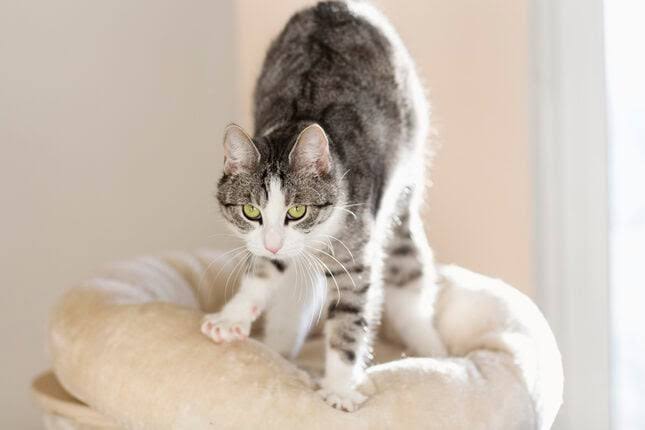

Your cat doesn’t knead the floor. They don’t knead the cold countertop or the hard chair in the corner. They choose specific things: the plushest blanket, the softest pillow, and — if you’re lucky — you.
That selectivity is actually telling. Cats associate kneading with softness, warmth, and deep emotional safety. When your cat chooses your lap over literally every other surface in the house, they’re not doing it randomly.
They genuinely feel safer with you than anywhere else in the room.
Behaviorists call this a “trust display.” It’s one of the clearest signs a cat can give that they have fully accepted you as their person — not just their food supplier.
Their Ancestors Did It Too (But for Different Reasons)
Here’s where things get prehistoric.
Long before cats were curled up on memory foam beds and eating food out of ceramic bowls, their ancestors lived wild. And before sleeping in the wild, small cats would press down tall grass and brush with their paws — creating a flat, comfortable, hidden nest.
Same motion. Completely different context.
They were also checking for hidden threats — snakes, insects, uneven ground — before lying down in a spot. The paws would assess the surface before the body trusted it.
Your cat does this same thing today before settling onto their bed or favorite blanket. They’re not being weird. They’re running a safety check that’s millions of years old.
The wild is long gone. The instinct isn’t.
They’re Also Leaving Their Scent on You
Cat paws are not just cute — they’re loaded.
The soft pads on the bottom of a cat’s feet contain scent glands. Every time they knead a surface, they deposit their unique chemical signature on it. It’s invisible to us, but other animals can detect it clearly.
In multi-pet households, kneading a shared blanket or a piece of furniture is essentially a cat’s way of posting a “this is mine” sign.
When they knead you — they’re marking you as theirs.
Some people find that odd. But honestly? Being claimed by your cat is kind of an honor.
And Sometimes It’s Just How They De-Stress
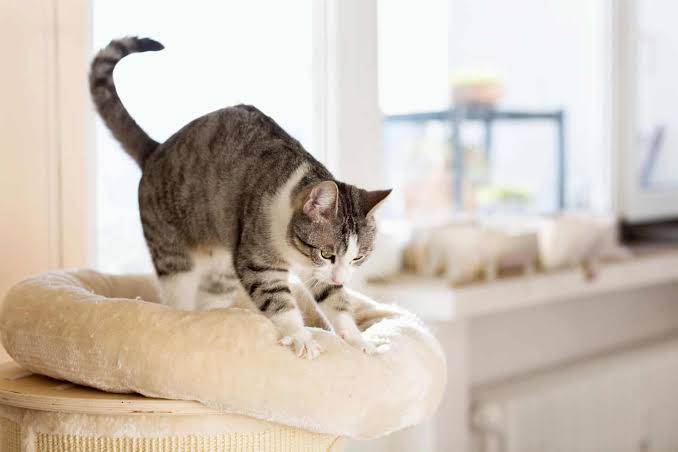
Kneading isn’t always about deep emotional bonding. Sometimes it’s just a self-soothing habit.
The repetitive, rhythmic motion of kneading has a genuinely calming effect on cats. It’s the feline equivalent of a human tapping their fingers, humming to themselves, or bouncing their leg. It helps regulate their nervous system.
You’ll often see cats knead right before a nap — it’s part of their wind-down ritual. Settle in, knead a few times, feel relaxed, sleep.
Some cats also knead when mildly stressed or overstimulated. It’s how they bring themselves back to a calm baseline.
The Claw Problem (And What to Do About It)
Okay, let’s talk about the part nobody loves: the claws.
Some cats knead with fully extended claws. To them, they’re in a blissful trance of contentment. To your legs, it feels like slow, rhythmic torture.
What not to do: Never push your cat off your lap or scold them for kneading. They have absolutely no idea they’re hurting you. To them, they’re expressing the purest form of affection they know. Punishment will only confuse and upset them.
What actually works:
Keep their nails trimmed regularly — every 3 to 4 weeks. Shorter claws still allow the kneading motion but dramatically reduce the pain.
Keep a thick blanket folded nearby specifically for this purpose. The moment they look like they’re about to start, slide it under their paws. They’ll happily knead the blanket instead.
You can also gently hold their paws still without pushing them away — some cats accept this and continue kneading but with softer pressure.
One More Thing — The Drooling
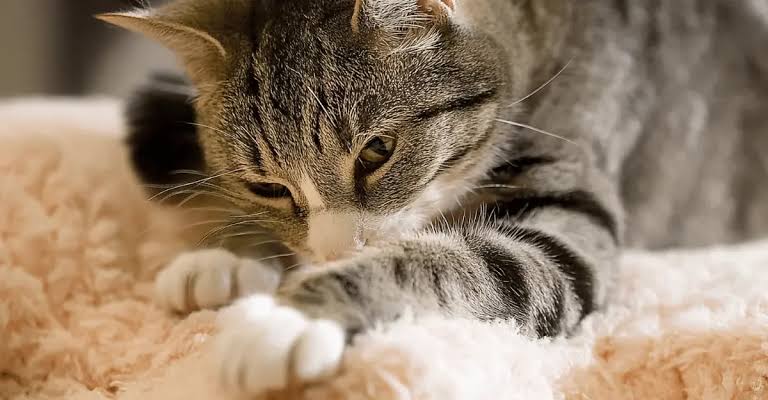
If your cat sometimes drools while kneading, you’re not imagining it.
It happens because deep kneading puts cats into such a profound state of relaxation that they temporarily forget to swallow their saliva. Their brain is so busy running that ancient comfort loop — warmth, safety, softness, mother — that basic functions like swallowing take a backseat.
It’s a little gross. It’s also genuinely adorable. It means your cat has fully let go of every guard they had.
So What Does It All Mean?
Every time your cat makes biscuits on your lap, they’re running a program that was written before they were born — a loop that connects the physical motion of kneading to safety, comfort, and belonging.
You didn’t just get a cat. You became someone’s safe place.
That’s worth a few claw marks on your jeans.