
So, you have finally decided to invest in proper training for your dog. It is a great choice. Whether you just brought home an adorable 8-week-old puppy or you have a full-grown dog who treats your house rules like suggestions, finding the right dog training near me is one of the smartest decisions you’ll make as a dog owner.
But here’s the problem: the dog training industry in the United States is almost entirely unregulated. Anyone — and we mean anyone — can print out business cards that say “Dog Trainer” without a single credential, test, or hour of formal education. That means it falls on you to do the homework before handing over your dog and your hard-earned money.
Don’t worry. That’s exactly what this guide is for.
We’ve put together the most comprehensive resource on finding local dog training in the USA. It covers the types of training available in your city and the exact questions you should ask a trainer before signing anything. By the time you finish reading, you’ll know what to look for, what to avoid, and how to ensure your dog gets the care and training they deserve.
Let’s get into it. 🐾
Why Dog Training Is One of the Best Investments You’ll Ever Make for Your Dog
Most dog owners understand that training is important. What they don’t always realize is just how important — and how quickly skipping it can spiral into serious problems.
Here’s the hard truth: untrained dogs are one of the leading reasons dogs end up in shelters in the United States. The American Society for the Prevention of Cruelty to Animals (ASPCA) reports that millions of dogs are surrendered every year, and behavioral issues are among the top reasons cited by owners.
Proper training doesn’t just make your life easier — it literally saves dogs’ lives.
But beyond the statistics, here’s what dog training actually does for your dog and your family:
The Real Benefits of Dog Training
For your dog:
- Builds confidence and reduces anxiety
- Provides critical mental stimulation (a bored dog is a destructive dog)
- Improves their ability to handle new environments, people, and situations
- Makes veterinary visits, grooming, and travel far less stressful
- Strengthens the bond between dog and owner
For you and your family:
- No more jumping on guests
- Peaceful walks without pulling, lunging, or barking
- A dog who comes when called — every time
- Less frustration, less stress, and a lot more enjoyment
- Confidence to take your dog everywhere
For the community:
- Safer interactions with other dogs and people
- Fewer noise complaints from neighbors
- A well-mannered dog who represents responsible pet ownership
The bottom line? The time and money you invest in training now will save you years of frustration, damage to your home, and potentially thousands of dollars in vet bills related to stress-related behaviors or injuries from accidents.
Types of Dog Training Available Near You in the USA
Not all dog training is the same. The type of training that’s right for your dog depends on their age, temperament, current behavior challenges, and your own goals and lifestyle. Here’s a breakdown of everything that’s available:
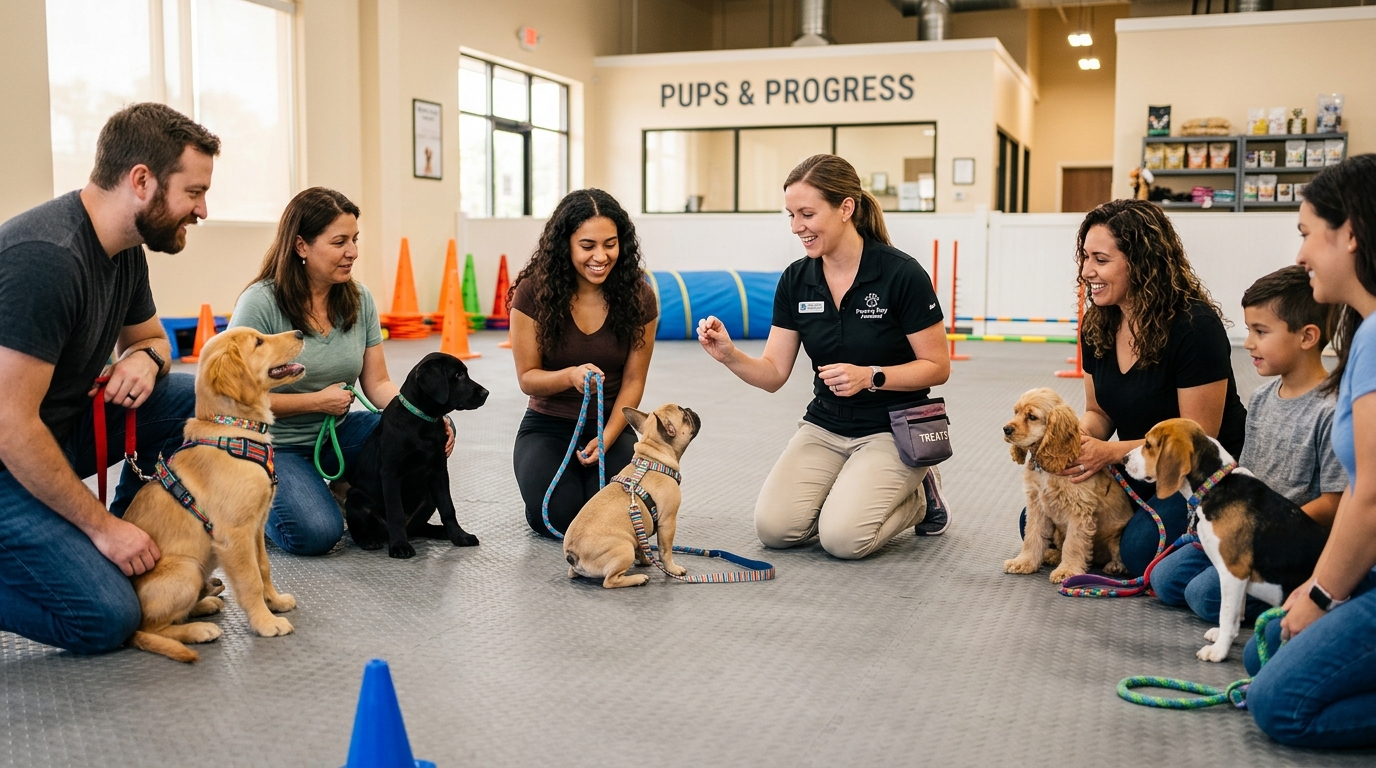
1. Puppy Training Classes (Ages 8–16 Weeks)
If you have a puppy, start here. Today. The window between 8 and 16 weeks is called the socialization period, and it’s the single most critical developmental phase in your dog’s entire life.
During this time, puppies form lifelong impressions about the world around them. Positive exposure to other dogs, people, sounds, surfaces, and environments during this window creates a confident, well-adjusted adult dog. Miss it, and you may spend years dealing with the fallout — fear, anxiety, reactivity, and aggression.
Good puppy classes cover:
- Basic commands: sit, down, stay, come, leave it
- Bite inhibition (teaching puppies to control the pressure of their bite)
- Leash manners
- Socialization with other puppies and humans
- Foundation for crate training and house training
- Preventing resource guarding and separation anxiety
What to look for: Classes held in a clean, safe environment with small groups (typically 6–10 puppies max), led by a certified trainer who prioritizes positive reinforcement.
Typical duration: 4–8 weeks, one class per week
USA Cost Range: $100–$300 for the full course
2. Basic Obedience Training
The bread and butter of dog training. Basic obedience is for dogs of any age who need a solid foundation of essential skills:
- Sit, Down, Stay, Come (recall), Leave It, Drop It
- Walking politely on leash without pulling
- Not jumping on people
- Responding reliably to their name
- Basic door manners (not bolting outside)
This works for both puppies who’ve graduated from puppy class and adult dogs who missed out on early training. Adult dogs can absolutely learn these skills — don’t let anyone tell you otherwise.
Format options: Group classes (most affordable), private sessions, or a combination of both.
3. Advanced Obedience and Off-Leash Training
Once your dog has nailed the basics, advanced training takes everything to the next level:
- Off-leash reliability in real-world environments
- Distance commands (sit-stay from 30 feet away)
- Working in high-distraction environments (busy parks, streets, dog-friendly stores)
- Complex behavioral chains
- Competition obedience or rally preparation
- Canine Good Citizen (CGC) certification prep (a widely recognized AKC credential)
4. Behavior Modification
This is specialized training for dogs with significant behavioral issues, including:
- Aggression (toward people, other dogs, or specific triggers)
- Separation anxiety
- Reactivity and leash frustration
- Excessive barking
- Resource guarding
- Fear-based behaviors
Important: Behavior modification is NOT basic obedience training with extra steps. It requires a certified behaviorist — ideally a Certified Applied Animal Behaviorist (CAAB) or a board-certified Veterinary Behaviorist (DACVB). In serious cases of aggression, medication may also be part of the treatment plan.
Never attempt to address serious aggression on your own, and do not hire a general obedience trainer for behavior modification — you could make the problem worse or get someone hurt.
5. Board and Train Programs (“Doggy Boot Camp”)
Your dog lives with the trainer for 2–4 weeks and receives intensive, daily training throughout their stay.
Who it’s great for:
- Busy owners who don’t have time for weekly classes
- Dogs who need rapid behavior improvement
- Owners preparing for a move, new baby, or major life change
What to know:
- Results depend heavily on follow-through from the owner after the program ends
- You’ll need “transfer sessions” where the trainer teaches you how to maintain what the dog learned
- Always tour the facility, verify staff credentials, and ask for references before enrolling
- Legitimate programs will never lock you out or refuse to show you the training methods used
USA Cost Range: $1,500–$4,000+ for 2–4 weeks
6. Private Dog Training Sessions (In-Home or Facility)
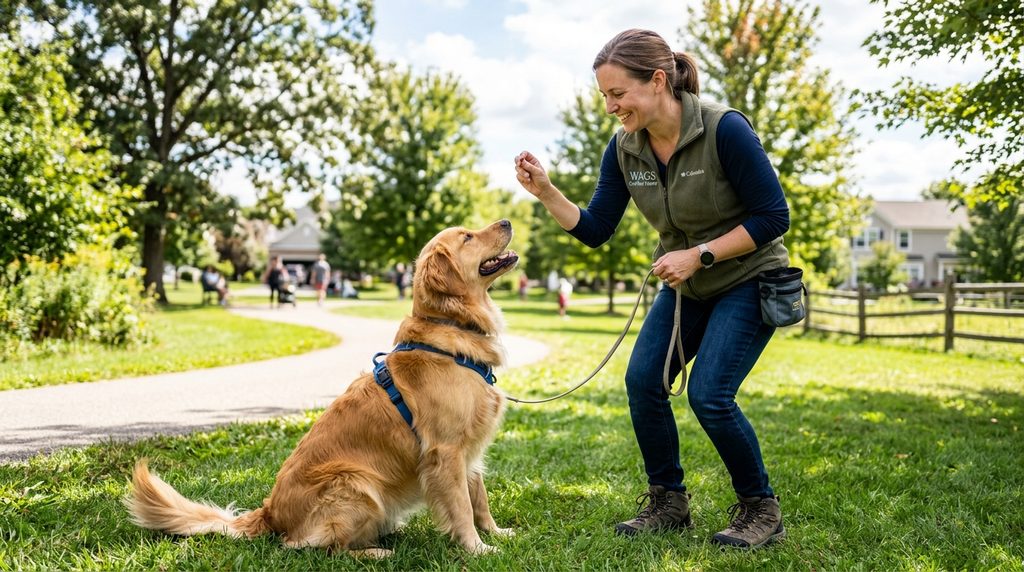
One-on-one sessions with a certified trainer, either at their training facility or in your home. In-home training is especially useful for:
- Dogs with anxiety who struggle in new environments
- Behavior issues that occur primarily at home (door bolting, resource guarding)
- Owners who prefer a customized curriculum
- Dogs who don’t do well in group settings
USA Cost Range: $75–$200 per session
7. Group Obedience Classes
The most affordable option and a great choice for social, well-adjusted dogs. Group classes offer the added benefit of real-world distraction training — because learning to sit in a quiet room is easy; learning to sit in a room full of other dogs? That’s real training.
USA Cost Range: $20–$50 per class, or $100–$250 for a multi-week course
8. Dog Sports and Specialized Training
For dogs who need a job and owners who want a hobby:
- Agility — obstacle courses, speed, and teamwork
- Nose Work / Scent Detection — great for high-energy and anxious dogs
- Therapy Dog Training — certify your dog to visit hospitals, schools, and nursing homes
- Service Dog Training — for dogs who will perform specific tasks for a person with a disability
- Canine Good Citizen (CGC) — AKC’s behavioral certification, recognized nationwide
How to Find Dog Training Near Me in Your City
Now that you know what’s available, let’s talk about how to actually find a qualified trainer in your area.
Method 1: Google Search + Google Maps
Search “dog training near me” or “dog trainers in [your city, state].” Google Maps will show you local businesses with star ratings, reviews, photos, and contact info.
What to look for in Google results:
- 4.5 stars or higher
- At least 25–50 reviews (more is better)
- Trainer responds to both positive and negative reviews professionally
- Photos of actual training sessions (not just stock photos)
- Clear website with credentials listed
Method 2: Ask Your Veterinarian
Your vet sees dozens of dogs every week and often knows firsthand which local trainers get results. Ask your vet (and their staff) which trainer they’d recommend for your dog’s specific needs.
Method 3: AKC Trainer Search
The American Kennel Club (AKC) maintains a trainer directory at their website. Trainers listed here must meet AKC’s requirements and many offer CGC preparation.
Method 4: APDT Trainer Directory
The Association of Professional Dog Trainers (APDT) directory at apdt.com lists certified trainers across the USA. You can filter by location, specialty, and training method.
Method 5: Ask in Local Facebook and Nextdoor Groups
Type your city + “dog trainer” into local Facebook groups or Nextdoor. Real neighbors sharing real experiences is some of the most trustworthy referral data you’ll find.
Method 6: Pet Store Training Programs
Large chains like PetSmart and Petco offer affordable group training classes led by their certified trainers. These are a great starting point for basic obedience and puppy classes, though they may not be equipped for complex behavioral issues.
What Certifications Should a Dog Trainer Have?
Here’s your cheat sheet for US dog trainer credentials:
| Certification | Full Name | What It Means |
|---|---|---|
| CPDT-KA | Certified Professional Dog Trainer – Knowledge Assessed | Industry standard, requires exam + experience hours |
| CPDT-KSA | Certified Professional Dog Trainer – Knowledge & Skills Assessed | Higher level, includes practical skills assessment |
| CBCC-KA | Certified Behavior Consultant Canine | Specializes in behavior modification |
| CAAB | Certified Applied Animal Behaviorist | Graduate-level credential, serious behavior issues |
| DACVB | Diplomate of American College of Veterinary Behaviorists | Veterinarian specializing in behavior — the gold standard |
| KPA CTP | Karen Pryor Academy Certified Training Partner | Respected positive-reinforcement credential |
| IAABC Member | Int’l Assoc. of Animal Behavior Consultants | Professional membership organization |
Pro Tip: You can verify CPDT-KA credentials at ccpdt.org. It takes 30 seconds and could save you from hiring an unqualified trainer.
Questions You MUST Ask Before Hiring a Dog Trainer
Don’t sign anything until you’ve asked these:
About credentials:
- What certifications do you hold, and where can I verify them?
- How many years have you been professionally training dogs?
- Do you have experience with my dog’s specific breed or behavior issue?
About methods:
- What training methods and tools do you use?
- Do you use prong collars, choke chains, or e-collars? If so, when and why?
- How do you handle a dog who is scared, reactive, or shuts down?
About the program:
- Can I observe a class or session before committing?
- What does a typical session look like?
- What should I do between sessions to reinforce the training at home?
About results and follow-up:
- What realistic outcomes can I expect, and on what timeline?
- What happens if my dog isn’t progressing?
- Do you offer follow-up support after the program ends?
- Can you provide references from past clients?
Red Flags: When to Walk Away from a Dog Trainer
Not every person who calls themselves a “dog trainer” deserves your trust. Here are the warning signs:
🚩 Uses dominance theory or “alpha” language — The idea that dogs are trying to “dominate” their owners has been thoroughly debunked by modern animal behavior science. Trainers still using this language are behind the times.
🚩 Relies on pain or fear — Shock collars (e-collars) used punitively, prong collars, choke chains, alpha rolls, and intimidation tactics are unnecessary, harmful, and counterproductive for the vast majority of dogs.
🚩 Refuses to let you observe — Any trainer worth hiring will welcome you to watch a class or session. Secrecy is a serious red flag.
🚩 Guarantees specific results — Ethical trainers don’t guarantee results because training depends on many factors including the dog’s history, the owner’s consistency, and the complexity of the issue.
🚩 Can’t verify their credentials — Ask for certification numbers. If they can’t provide them, it’s probably because they don’t have any.
🚩 Wants to isolate your dog immediately in board-and-train — You should always get to tour the facility and understand exactly what methods will be used before leaving your dog.
🚩 No online presence or reviews — Even small local trainers should have Google reviews or some form of verifiable reputation.
How Much Does Dog Training Cost in the USA?
rices vary significantly by location (urban areas like NYC, LA, and Chicago tend to run higher), experience level, and training type. Here’s what you can expect to pay across the USA:
Detailed Cost Breakdown
| Service | Average USA Cost | Notes |
|---|---|---|
| Puppy Class (4–8 weeks) | $100 – $300 | Group setting, 1x/week |
| Basic Obedience Group Class | $20 – $60 per session | $100–$250 for packages |
| Private Session (1 hour) | $75 – $200 | In-home often costs more |
| Board and Train (2 weeks) | $1,500 – $2,500 | Varies by facility |
| Board and Train (4 weeks) | $2,500 – $4,000+ | Premium facilities higher |
| Behavior Modification | $100 – $250/session | May need 6–12+ sessions |
| Veterinary Behaviorist Consult | $250 – $500/hour | Worth every penny for severe issues |
| Online Training Programs | $30 – $300 | Great supplement, not a replacement |
| Service Dog Training | $15,000 – $50,000+ | Specialized, extensive program |
| Therapy Dog Certification | $150 – $400 | Includes evaluation |
How to Save Money on Dog Training
- Buy packages upfront — most trainers offer discounts (10–20% off) for booking multiple sessions at once
- Start with group classes — they’re a fraction of the price of private sessions for basic obedience
- PetSmart / Petco classes — solid, affordable option for basic training in most US cities
- Online training as a supplement — use platforms like Fenzi Dog Sports Academy or Kikopup on YouTube to practice between paid sessions
- Community colleges and dog clubs — AKC clubs and community training clubs often offer classes at very reasonable prices
In-Home vs. Facility Training: Which Is Right for Your Dog?
Both options have their place, and the right choice depends on your dog’s needs:
| Factor | In-Home Training | Facility Training |
|---|---|---|
| Best for | Home-specific issues, anxious dogs | Socialization, distractions |
| Cost | Usually higher | Usually lower |
| Convenience | Very high (trainer comes to you) | Requires travel |
| Distraction level | Lower (familiar environment) | Higher (real-world practice) |
| Socialization | Limited | Excellent |
| Equipment | Trainer brings everything | Facility provides |
Recommendation: Start with in-home if your dog has anxiety or severe behavior issues in the home. Use facility or group training for socialization and real-world distraction training.
Online Dog Training vs. Local Dog Training Near Me
Since 2020, online dog training has exploded. But does it actually work?
What online training does well:
- Basic obedience commands
- Building a training routine
- Owner education and understanding dog behavior
- Accessibility (available anywhere, anytime)
- Price (often much more affordable)
Where online training falls short:
- Can’t observe or correct your technique in real-time
- No hands-on guidance for complex behavioral issues
- Zero socialization for your dog
- Requires significant self-discipline from the owner
- Not appropriate for aggression, severe anxiety, or complex behavior issues
Our take: Online training is a great supplement to professional in-person training, not a replacement — especially for puppies, reactive dogs, or dogs with behavioral problems. Use both together for the best results.
Positive Reinforcement vs. Other Training Methods: What the Science Says
This is a topic that generates a lot of passionate debate, so let’s talk facts.
What Is Positive Reinforcement?
Positive reinforcement (R+) means adding something the dog values (treats, praise, play) immediately after a desired behavior, making that behavior more likely to occur in the future. It’s the foundation of modern, science-based dog training.
What About Punishment-Based Methods?
Punishment-based training uses aversives (pain, fear, startling) to suppress unwanted behaviors. While it can produce fast-looking results, research consistently shows:
- It increases stress and anxiety in dogs
- It can trigger aggression and fear responses
- It damages the dog-owner relationship
- The underlying motivation for the behavior is not addressed
- Suppressed behaviors often return or come out in other ways
The American Veterinary Society of Animal Behavior (AVSAB) and the American Veterinary Medical Association (AVMA) both officially recommend against the use of punishment and aversive methods as primary training tools.
Modern Training Methods Used by Top USA Trainers
| Method | How It Works | Best For |
|---|---|---|
| Positive Reinforcement (R+) | Reward desired behaviors | All dogs, all ages |
| Clicker Training | Mark exact moment of correct behavior | Precision teaching |
| Lure and Reward | Use treat to guide behavior, then reward | Teaching new commands |
| Marker Training | Use word “Yes!” as marker instead of clicker | Convenient anywhere |
| Capturing | Reward naturally occurring behaviors | Calm behavior, relaxation |
| Shaping | Reward successive approximations of a goal | Complex behaviors |
How to Get the Most Out of Your Dog Training Investment
You’ve found a great trainer. You’ve paid for the program. Now what?
Practice Every. Single. Day.
Training sessions don’t just happen in class — they happen every time you interact with your dog. Even 5–10 minutes of deliberate practice twice a day adds up to massive improvements over weeks and months.
Keep Sessions Short and Fun
Dogs — especially puppies — have limited attention spans. 5–10 minute training sessions are far more effective than one long, exhausting hour. Always end on a positive note with a behavior your dog can succeed at.
Be Consistent With Everyone in the Household
If you say “off” when the dog jumps and your spouse says “down,” you’ve created confusion. Every person in the house needs to use the same cues, the same rules, and the same rewards. Hold a family meeting. Seriously.
Use the Right Rewards
Match the reward to the difficulty of the task:
- Low-distraction, easy tasks: Regular kibble or small training treats
- New behaviors or moderate distractions: Soft, smelly training treats
- High-distraction environments or new challenges: High-value rewards — chicken, cheese, hot dogs
Generalize the Training
A dog who only sits in your living room hasn’t learned “sit” — they’ve learned “sit in this specific room.” Practice commands in different locations, with different people present, and at different times of day.
Track Progress
Keep a simple training log: what you practiced, how the dog did, what needs work. This keeps you accountable and helps you see progress that’s easy to miss day-to-day.
Communicate With Your Trainer
Between sessions, send your trainer a video or message if you’re having trouble with something. Good trainers want to hear from you and can help you troubleshoot before you accidentally reinforce the wrong thing.
Dog Training Resources in the USA
Top USA Dog Training Organizations
- APDT (Association of Professional Dog Trainers) — apdt.com
- CCPDT (Certification Council for Professional Dog Trainers) — ccpdt.org
- IAABC (International Association of Animal Behavior Consultants) — iaabc.org
- AKC (American Kennel Club) — akc.org/events/training
- AVSAB (American Veterinary Society of Animal Behavior) — avsab.org
Find a Trainer by State (Major Cities)
| State | Where to Search |
|---|---|
| California (LA, SF, San Diego) | APDT Directory + Yelp + Google Maps |
| Texas (Houston, Dallas, Austin) | CCPDT Trainer Search + Local AKC Clubs |
| New York (NYC, Buffalo) | IAABC Directory + NYC-specific dog groups |
| Florida (Miami, Orlando, Tampa) | Google “CPDT certified trainer + city” |
| Illinois (Chicago) | APDT + Chicago Area Dog Owners Facebook groups |
| Washington (Seattle) | APDT + Nextdoor + PetSmart/Petco |
| Colorado (Denver, Boulder) | AKC Club directory + APDT |
| Georgia (Atlanta) | CCPDT + Nextdoor + Google Reviews |
Frequently Asked Questions About Dog Training Near Me
❓ How do I find a reputable dog trainer near me in the USA?
Search Google for “dog training near me” or “CPDT certified dog trainer in [city].” Check the APDT directory at apdt.com, ask your veterinarian for a referral, and look at Google reviews with at least 4.5 stars. Always verify credentials before booking.
❓ At what age should I start training my dog?
As early as possible. Puppies can begin basic training at 7–8 weeks old. The socialization window (8–16 weeks) is critical for lifelong behavioral health — don’t miss it. That said, adult dogs can absolutely be trained at any age. “Old dogs can’t learn new tricks” is a myth.
❓ How many training sessions does a dog need?
It depends on your goals and your dog’s starting point. Basic obedience typically takes 4–8 weeks of consistent weekly classes plus daily practice at home. Behavioral issues may require months of ongoing work. Training is a lifelong commitment, not a one-time event.
❓ Is group class or private training better?
Both have their place. Group classes are more affordable and provide socialization. Private sessions offer personalized attention and are better for dogs with specific issues or owners who need more hands-on guidance. Many trainers recommend starting with a private assessment then joining group classes.
❓ Is board and train worth the money?
Board and train can be extremely effective — when done by a qualified trainer using humane methods. The key is that YOU must be willing to maintain the training after your dog comes home. No board-and-train is permanent without owner follow-through.
❓ What if my dog has aggression problems?
Aggression should always be evaluated and treated by a certified professional — a CBCC-KA, CAAB, or veterinary behaviorist. Do not attempt to manage aggression on your own or with a general obedience trainer. In some cases, veterinary intervention and medication are also needed.
❓ How much does dog training typically cost in the USA?
Group classes: $100–$300 per course. Private sessions: $75–$200 per hour. Board and train: $1,500–$4,000+. Costs are higher in major cities (NYC, LA, Chicago, San Francisco).
❓ Can I train my dog myself without a professional?
Absolutely — many owners do successfully train their dogs using books, YouTube, and online programs. But working with a certified professional, even for just a few sessions, dramatically improves outcomes by catching mistakes early and giving you real-time feedback that no video can replace.
❓ What is positive reinforcement dog training?
Positive reinforcement training means rewarding behaviors you want to see more of — using treats, praise, or play. It’s the most widely recommended method by veterinarians and animal behaviorists because it’s effective, humane, and builds a trusting relationship between you and your dog.
❓ Are PetSmart and Petco dog training classes worth it?
Yes — for basic obedience and puppy classes, PetSmart and Petco offer solid, affordable programs led by certified trainers. They’re a great starting point for most dogs. For serious behavioral issues, however, you’ll want to seek out a specialist.
Wrapping Up: The Best Dog Training Near You Starts With One Step
Finding the right dog trainer near you is one of the most important decisions you’ll make for your dog’s future — and now you have everything you need to make that decision with confidence.
Here’s the quick summary:
- ✅ Identify the type of training your dog needs
- ✅ Search Google, APDT, CCPDT, and ask your vet
- ✅ Verify credentials (CPDT-KA is the minimum standard)
- ✅ Ask the right questions before committing
- ✅ Choose a trainer who uses positive reinforcement
- ✅ Watch for red flags and trust your gut
- ✅ Do the work at home between sessions
Your dog isn’t just a pet — they’re a member of your family. They deserve a trainer who understands that, and an owner who’s committed to helping them become the best dog they can be.
Take that first step today. Search for a qualified local trainer, make a call, visit a class. Your future self — and your dog — will thank you. 🐾
📚 Related Articles (Internal Links)
(Replace with your actual post URLs)
- How to Potty Train a Puppy Fast: The Complete 2025 Guide
- Best Dog Training Treats for American Dogs in 2025
- Crate Training 101: Everything You Need to Know
- Dog Socialization Guide: Build a Confident, Happy Dog
- Signs Your Dog Needs a Professional Behaviorist
- Canine Good Citizen Test: How to Prepare Your Dog