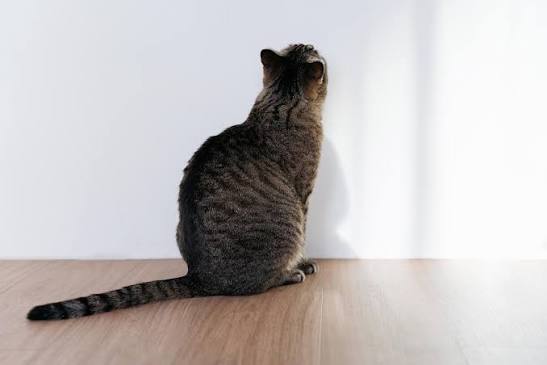

You glance over and your cat is locked onto a blank wall, perfectly still, like there’s a movie playing that only she can see. So why does my cat stare at the wall? Most of the time she’s seeing, hearing, or smelling something you can’t. Occasionally it’s a sign of a health problem, so it helps to know which clues matter.
Why Does My Cat Stare at the Wall? The Short Answer
Cats stare at walls mostly because their senses pick up things people miss: a faint sound inside the wall, a speck of dust in a sunbeam, a tiny insect, or a scent. Hunting instinct and curiosity keep them watching. A less common cause is a medical issue such as cognitive decline in older cats, so context matters more than the stare itself.
Below are seven reasons, a table that matches your cat’s behavior to a cause, the warning signs that mean a vet call, and a few ways to give your cat something better to watch.
What Are the 7 Reasons Cats Stare at Walls?
The first four are normal cat behavior. The last three are worth a closer look.
1. They hear something you can’t
Cats can hear far higher-pitched sounds than people can, and they can rotate their ears to pinpoint where a noise comes from. Cats.com, in an article by a veterinarian, says a staring cat may be tuning in to pipes, air ducts, a neighbor, or a rodent moving inside the wall. Catster’s veterinary writer adds that some cats have led their families to mice or raccoons living in the walls.
The giveaway is the ears. If they’re pricked toward the wall and swiveling as the sound moves, your cat is listening, not zoning out.
2. They see tiny movements
Cats are tuned to movement and to dim light. According to Cats.com, they notice small shifts that we overlook, such as dust floating in a sunbeam, a shadow, or a small insect. PetPlace gives similar examples, including a spider in a crevice or a flicker of reflected light. Cats.com also mentions a study suggesting many mammals, cats included, can probably see some ultraviolet light, which could mean your cat sees patterns on a wall that look blank to you.
3. They smell something
Cats.com says cats have about 200 million scent receptors, roughly 40 times more than people. A cat sniffing and staring at a wall may be following a scent coming from inside it, like a mouse or a pest, or from the other side.
4. It’s curiosity or hunting instinct
PetPlace notes that staring can be a form of stalking, since cats are hunters. A cat may also fixate on a spot where she once saw or heard something interesting, then come back to check on it. If your cat crouches, wiggles her rear, or pounces, she’s in hunting mode and you can relax.
5. They’re bored or feeling low
Catster says depression is most often seen in indoor cats who lack mental stimulation, and suggests enrichment, play, and a bird-watching window perch. PetPlace takes a different view, saying wall staring is not a sign of a cat that’s under-stimulated. The sources disagree, so don’t assume boredom, but adding more play never hurts. If your cat has also stopped playing or eating, that’s a vet question.
6. Age-related brain changes
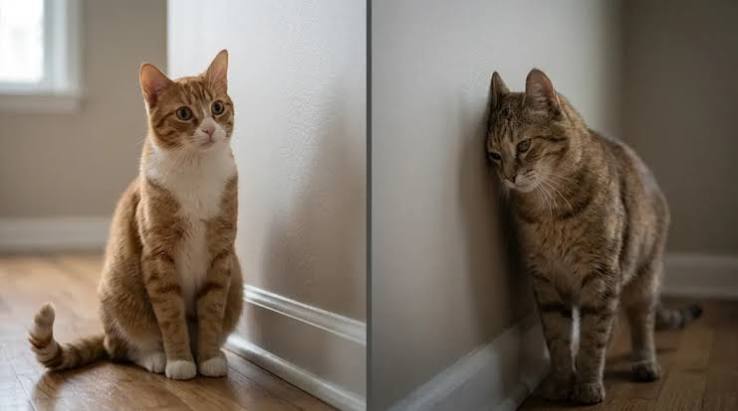
Feline cognitive dysfunction, a decline in thinking and memory similar to dementia in people, is usually a concern in cats around 12 to 13 or older, according to Catster. Staring into space is a classic sign, along with confusion and forgetting why they walked into a room. Cats.com lists other clues: pacing or wandering, nighttime crying, litter box accidents, less grooming, and changes in how they interact with you.
There’s no cure, but a vet can suggest treatments and home changes that may slow it. If your older cat has recently started staring, book a visit. Our guide to how long cats live covers what to expect as cats age.
7. Something medical is going on
Several conditions can show up as staring:
- Kidney or liver disease. Toxins that build up in the blood can cause confusion. Liver disease usually comes with other signs, such as vomiting, poor appetite, yellowing of the skin or eyes, or weight loss, according to Catster.
- Partial seizures. Cats.com says cats more often have partial seizures than full-body ones, and these can look like staring into space.
- Feline hyperesthesia. Cats.com and PetPlace describe trance-like staring along with signs like frantic grooming at the base of the tail, sensitivity to touch, loud meowing, and enlarged pupils. The cause isn’t fully understood.
- Neurological disease. Catster lists infections, toxins, and tumors as possible triggers, with signs such as circling, disorientation, seizures, and head pressing.
Which Reason Fits Your Cat?
Look at the whole cat, not just the stare.
| What you see | Likely reason | What to do |
| Ears pricked and swiveling, head tilts toward the wall | Hearing something | Check for pests if it keeps happening |
| Eyes tracking tiny movements, a pounce at the wall | Seeing dust, light, or insects | Nothing needed, or offer a toy |
| Sniffing along the wall, nose at the baseboard | Following a scent | Look for a leak, a pest, or a spill |
| Crouched, tail twitching, wiggling | Hunting instinct | Play with a wand toy |
| Staring plus pacing, confusion, or yowling at night | Possible cognitive decline | Book a vet visit |
| Staring plus twitching, drooling, or a vacant look that lasts | Possible seizure | Film it and call your vet |
| Pressing her head into the wall | Possible serious illness | Call your vet right away |
Is It Normal for a Cat to Stare at the Wall?
Yes, an occasional stare is normal, and cats do it at every age. Cats.com says staring on its own is usually harmless, but staring along with other symptoms needs an evaluation.
Here’s our rule of thumb. If your cat stares and then does something sensible, like pouncing, chasing, or moving on, she’s responding to something real. If she stares and then seems confused, doesn’t respond when you say her name, or can’t seem to snap out of it, treat it as a health issue.
When Should You Call the Vet?
See your vet if your cat’s staring comes with any of these:
- Staring that started in an older cat
- Disorientation, getting stuck in corners, or forgetting to eat
- More crying at night, or litter box accidents
- Changes in personality or how she interacts with you
- Vomiting, weight loss, or yellowing of the skin or eyes
- Twitching, drooling, or episodes where she doesn’t respond to you
- Enlarged pupils, circling, or frantic grooming near the tail
Pressing her head firmly against a wall or other hard surface for long periods is different from a normal head bump, which is a friendly scent-marking gesture. Cats.com advises contacting a vet urgently for head pressing, especially with pacing, circling, or seizures.
Film any episode you’re concerned about. A 30-second video helps your vet far more than a description. If your cat has also lost her appetite, our guide on a cat that’s not eating explains what to watch for.
How Can You Give Your Cat Something Better to Watch?
If a vet gives the all-clear, you can use the habit instead of worrying about it.
- Listen at the wall. PetPlace suggests putting your ear to the wall yourself. If you hear scratching, call a pest professional rather than a stern word to your cat.
- Try a flashlight beam. Moving a light across the wall gives her a target to chase. Keep the session short.
- Add a window perch. A bird feeder outside gives a bored cat a reason to look out instead of at a blank wall.
- Play daily. A few minutes with a wand toy keeps her hunting skills busy.
- Keep a routine. PetPlace recommends a regular routine, since it helps cats feel secure.
- Check on her stare habits over time. A brand-new habit is more worth noting than one she’s had since kittenhood.
Frequently Asked Questions
Why does my cat stare at the wall at night?
Cats are most active at dawn and dusk, and their senses are sharp in low light, so they often notice sounds and movement at night that you sleep through. If an older cat stares and yowls at night, ask your vet about cognitive dysfunction.
Why does my cat stare at the wall and meow?
She may hear or smell something she wants to investigate and is telling you about it. Loud, frequent crying, especially at night or with confusion, can be a sign of a medical problem, so mention it to your vet.
Is my cat seeing ghosts?
There’s no evidence of that. Cats.com treats the spirit stories as folklore, not an explanation, and advises a vet check before assuming anything supernatural. A cat’s senses are much sharper than ours, which is explanation enough for most staring.
Why does my kitten stare at the wall?
Kittens are curious and easily fascinated by movement, shadows, and sounds. It’s usually normal play and exploration. If the stare comes with twitching or non-responsiveness, tell your vet.
Should I stop my cat from staring at the wall?
Not if she’s relaxed and responsive. Interrupting a hunting or listening cat isn’t necessary. Step in only if the stare is paired with confusion or other warning signs.
The Bottom Line
One quick stare is a cat doing what cats do. Tonight, watch for what happens next: pouncing and pricked ears mean she’s onto something, while confusion or odd behavior means a vet visit. If she’s older and the habit is new, don’t wait. For more help reading your cat, see why your cat stares at you while you eat and our other cat behavior guides on PetsFuzz.