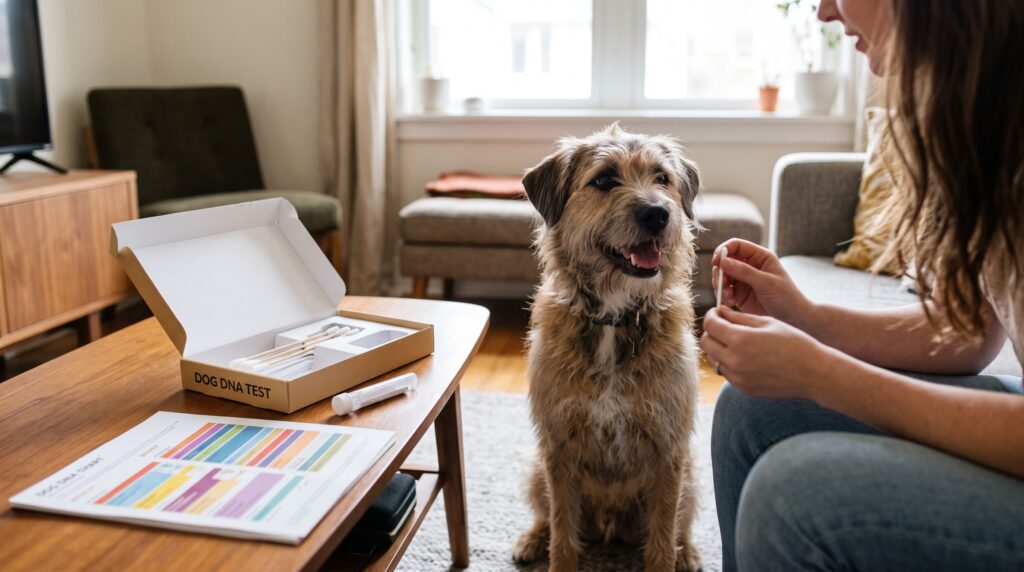

You walk into the living room and catch your rescue pup displaying odd behaviors. Maybe your small terrier-looking mix points like a German Shorthaired Pointer, or your medium black pup herds children around the yard like an Australian Cattle Dog.
Every rescue dog parent plays the guessing game: What mix is my dog, really?
Beyond satisfying your curiosity, guessing your dog’s heritage leaves critical blind spots in their veterinary care. Different breeds carry distinct genetic predispositions—from heart conditions and joint dysplasia to dangerous drug sensitivities.
Investing in a dog dna test takes the mystery out of your pet’s lineage. A simple 60-second cheek swab unlocks clear answers about breed ancestry, adult weight projections, behavioral triggers, and life-saving hereditary health markers.
Quick Comparison: Top Canine DNA Testing Kits
| Dog DNA Test Kit | Primary Focus | Breed Database Size | Health Marker Screening | Average Results Turnaround | Best For |
| Embark Breed & Health | Breed + Clinical Health | 350+ breeds | 250+ genetic conditions | 2 to 4 weeks | Comprehensive clinical screening & purebreds |
| Wisdom Panel Premium | Breed + Health + Traits | 365+ breeds | 260+ health tests | 2 to 3 weeks | Fast turnaround & extensive breed matching |
| Ancestry PetDNA | Ancestry & Physical Traits | 400+ breeds | Basic physical traits | 2 to 3 weeks | Budget-conscious pet parents wanting lineage |
| Basepaws Canine | Genetics + Oral Microbiome | 300+ breeds | Core genetic risks | 3 to 4 weeks | Dogs with recurring dental or gut problems |
What Is a Dog DNA Test and How Does It Work?
Canine genetic testing evaluates unique chromosomal markers to pinpoint biological ancestry and inherited mutations.
Scientists compare your dog’s sample against extensive reference databases containing thousands of purebred and pedigreed bloodlines.
The entire at-home process takes four straightforward steps:
- The Cheek Swab: You roll a soft collection swab against the inside of your dog’s cheek and gum line for 30 to 60 seconds to gather epithelial cells.
- Sample Drying and Sealing: You let the swab air dry briefly to prevent bacterial growth, then seal it in the provided sterile stabilization vial.
- Laboratory Analysis: The testing laboratory extracts DNA, amplifies the genetic material using polymerase chain reaction (PCR), and runs it through a high-resolution microarray chip.
- Data Matching: Powerful proprietary algorithms match your dog’s single nucleotide polymorphisms (SNPs) against purebred canine reference panels to construct an accurate family tree going back to great-grandparents.
3 Critical Benefits of Running a Canine Genetic Test
Pet owners often buy DNA kits out of curiosity, but the medical value far outweighs the novelty.
1. Accurate Breed Identification and Weight Forecasting
Physical appearance frequently tricks even seasoned shelter workers and veterinarians. Studies show visual breed identification accurately predicts shelter dog genetics less than 25% of the time.
Knowing exact breed percentages helps you:
- Plan appropriate physical exercise: High-energy working breeds need mental stimulation alongside physical walks.
- Understand natural instincts: You can adapt training styles to natural herding, hunting, or guarding impulses instead of punishing instinctual behaviors.
- Anticipate adult body size: Accurate weight forecasting prevents overfeeding and skeletal strain in growing puppies.
2. Identifying Dangerous Drug Sensitivities (MDR1 Mutation)
Certain herding breeds (like Collies, Australian Shepherds, and Whippets) frequently carry the MDR1 (ABCB1) gene mutation.
Dogs with this defective gene cannot pump specific drugs out of their brain tissue. Routine veterinary medications—including the heartworm preventive ivermectin, common sedatives, and anti-diarrheal drugs like loperamide—can cross the blood-brain barrier and cause fatal neurotoxicity.
A single DNA swab alerts your veterinarian to adjust prescriptions safely.
3. Early Detection of Hereditary Illnesses
Top-tier genetic tests screen for over 250 inherited conditions before clinical symptoms ever manifest:
- Degenerative Myelopathy (DM): A progressive spinal cord disease resembling ALS in humans.
- Dilated Cardiomyopathy (DCM): Genetic heart muscle failure common in Dobermans and Boxers.
- Progressive Retinal Atrophy (PRA): Inherited photoreceptor breakdown causing irreversible blindness.
- Von Willebrand’s Disease: A severe blood clotting disorder critical to identify before routine surgeries like spaying or neutering.
How Accurate Are Dog DNA Tests?
Modern commercial dog DNA testing services from established genetic laboratories achieve 98% to 99% accuracy for verified purebred reference matches.
However, three distinct factors influence your real-world test results:
- Database Scale: Kits with larger reference populations (350+ breeds) deliver pinpoint accuracy. Kits with smaller reference databases often categorize uncommon breeds as generic “unresolved” or “mixed breed” percentages.
- Sample Contamination: If your dog eats kibble, shares a water bowl with another pet, or chews a tennis ball within 60 minutes before swabbing, foreign proteins compromise the sample.
- Village Dogs and Landraces: If your dog originates from feral, free-breeding street populations outside North America or Europe (such as Middle Eastern pariah dogs or South American village dogs), commercial purebred databases cannot cleanly map them into modern kennel club categories.
Step-by-Step: How to Swab Your Dog Without Inconclusive Results
Veterinary genetics labs reject thousands of cheek swabs every month due to low cellular yield or food contamination. Follow these practical tips for a clean first attempt:
[Isolate Pet 60 Mins] ──> [Gently Swab Cheeks] ──> [Air Dry 5 Mins] ──> [Register Kit Online]
- Enforce a strict 60-minute fast: Withhold food, flavored chews, and shared toys for one full hour before swabbing.
- Target the lower cheek pocket: Slide the swab deep into the pouch between your dog’s lower molars and inner cheek.
- Rotate and apply gentle pressure: Spin the swab between your thumb and fingers for 45 to 60 continuous seconds to lift live skin cells, not just saliva.
- Air-dry completely: Stand the swab upright in a clean cup for five minutes before inserting it into the liquid preservative tube to eliminate mold risk.
- Register your barcode immediately: Activate the unique sample ID on the manufacturer’s online portal before dropping the prepaid envelope into the mailbox.
Dog DNA Test vs. Veterinary Diagnostics: What a Swab Cannot Tell You
While canine genetic screening reveals invaluable biological information, pet parents must understand its clinical limitations:
- DNA reveals risk, not an active diagnosis: Carrying two copies of a mutated gene proves a dog is genetically at risk for a disease, but it does not mean the dog currently suffers from it.
- It does not replace routine veterinary blood panels: Genetic swabs evaluate hereditary code; they do not monitor current kidney values, liver enzymes, or white blood cell counts.
- It cannot confirm food allergies: Environmental and food allergy diagnoses require strict elimination diet trials supervised by a veterinary dermatologist, not a saliva swab.
Frequently Asked Questions
Can a dog DNA test prove my dog is purebred for kennel club papers?
No. Official registration through the American Kennel Club (AKC) or The Kennel Club (UK) requires documented pedigrees and parentage verification through approved registry labs. Commercial kits serve personal ancestry and health insights.
How much does a reputable dog DNA test cost?
Basic breed-only kits range between $60 and $80. Comprehensive panels evaluating breed heritage plus 250+ genetic health risks cost between $130 and $200.
What age can you DNA test a puppy?
You can swab a puppy as soon as they reach a few weeks old. However, if the puppy is still nursing, separate them from their mother and littermates for at least two hours before swabbing to avoid collecting maternal milk DNA.