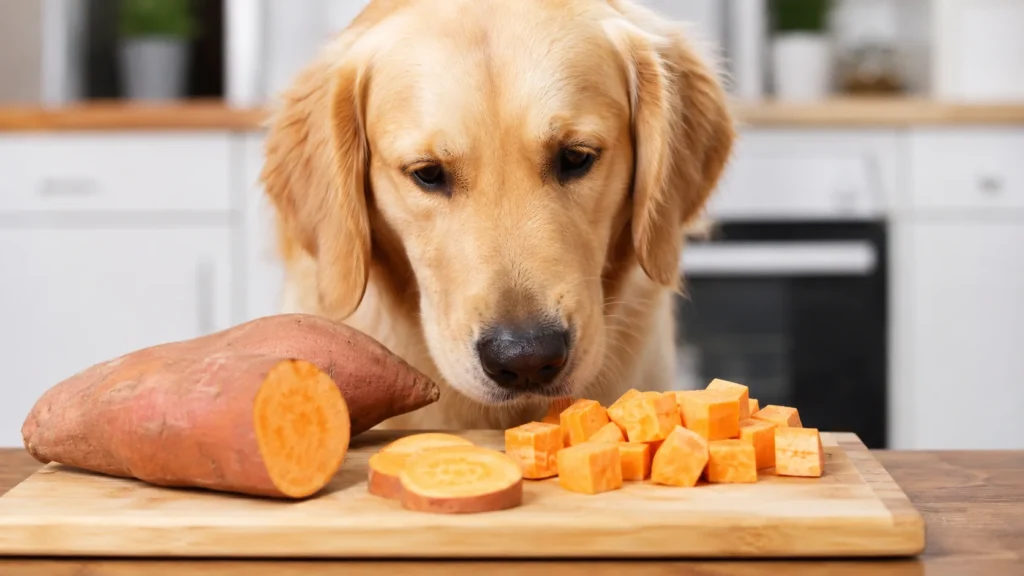

The holiday table is loaded, and your dog has spotted the bowl of glossy, sticky candied yams. So, can dogs eat candied yams? Not the candied kind. Plain cooked yams are safe, but the butter, brown sugar, and marshmallows that make candied yams a holiday favorite are what you need to keep away from your dog.
Can Dogs Eat Candied Yams? The Short Answer
No, dogs shouldn’t eat candied yams. Rover’s guide to yams, which quotes veterinarians, says dogs can eat yams and sweet potatoes “as long as they’re cooked plain,” and it lists candied yams among the dishes to avoid. The problem is the added sugar, butter, and toppings, not the vegetable. If your dog licked a spoon, it’s unlikely to be an emergency. Rover says a bite of candied yams with no toxic ingredients may not need a vet visit.
Below you’ll find whether yams and sweet potatoes are the same thing, what’s actually in candied yams, a safe way to share, and what to do if your dog got into the dish.
Are Yams and Sweet Potatoes the Same Thing?
Not technically, and it matters for your dog. Rover says the two come from different plant families. Sweet potatoes have smooth skin with orange or white flesh, while true yams have rough skin and white, yellow, purple, or pink flesh. Hepper adds that true yams are rarer in the Western world, and says that “when in doubt, assume it is a sweet potato.”
Here’s why the label is confusing. Tasting Table traces the American habit of calling sweet potatoes “yams” to early 20th-century Southern farmers, who adopted the word to set their crop apart from white potatoes. So the “candied yams” or canned “yams” in your pantry are usually sweet potatoes. A true yam is an African tuber with thick brown skin and a starchy, earthy taste.
Why does it matter? Hepper says raw yams contain tannins that can be toxic in large amounts, though cooking neutralizes them. It also says raw yams are hard, which makes them a choking hazard. Either way, cook them first.
Why Are Candied Yams Bad for Dogs?
The vegetable is fine. It’s the recipe.
Sugar and syrup
Candied yams are cooked in sugar, syrup, or both. Rover says added sugar is a concern and that dogs with diabetes should not eat much sugar, because yams and sweet potatoes already contain natural sugars. Hepper warns that added sugar can harm dogs, especially small ones, and says to check canned yams for added sugar and preservatives.
Butter and fat
Butter is a standard ingredient. PetMD says too much fat can cause digestive upset, and AKC notes that human baked goods high in fat and sugar can contribute to obesity, diabetes, and pancreatitis. Pancreatitis is an inflamed pancreas that can become serious quickly, so a sticky, buttery dish is worth keeping out of reach.
Marshmallows
Marshmallows add even more sugar. The bigger concern is what else might be in the dish. PetMD says sweet casseroles can be toxic to dogs if they contain chocolate or xylitol, and AKC calls xylitol “very toxic.” Read the label on any packaged ingredient.
Spices: cinnamon and nutmeg
Cinnamon is not toxic to dogs, according to AKC, but too much can irritate the mouth and stomach, and inhaling the powder can cause coughing and choking. AKC says the Pet Poison Helpline puts the trouble point at more than a teaspoon of powder for most pets. Nutmeg is the spice to watch. PetMD says it contains myristicin, which can poison dogs, and advises against feeding dogs anything with nutmeg. AKC says the small amount in baked goods is generally considered safe.
Pecans
Many recipes add pecans. AKC Chief Veterinarian Dr. Jerry Klein says pecans shouldn’t be given to dogs because they contain juglone and can grow molds that produce mycotoxins linked to tremors and seizures. One or two pieces most likely won’t cause a major problem, but call a vet if your dog eats them.
How Risky Is Each Ingredient?
| Ingredient | Risk for dogs | How worried to be |
| Plain cooked yam or sweet potato | None, in moderation | Low |
| Brown sugar, syrup | Obesity, upset stomach, trouble for diabetic dogs | Medium |
| Butter | Digestive upset, pancreatitis risk | Medium |
| Marshmallows | Sugar, and possibly xylitol in some products | Medium, higher if xylitol |
| Cinnamon | Mild irritation in large amounts | Low |
| Nutmeg | Toxic in large amounts | Medium |
| Pecans | Vomiting, mold toxins, fat | Medium to high |
How Can You Share Yams With Your Dog Safely?
Set a few pieces aside before anything sweet goes in the pan. Rover’s guidelines boil down to these steps:
- Cook them plain. No oil, sugar, salt, spices, or other seasonings.
- Cut them small. Raw pieces are tough, and large chunks or pieces with skin can cause dental problems or choking.
- Skip the skin. Peeled, soft cubes are easier to chew and digest.
- Start slow. The fiber can cause diarrhea or an upset stomach if your dog eats too much, so build up gradually.
- Keep it a treat. Rover says human food should be no more than 10% of your dog’s overall diet.
- Ask your vet first if your dog has diabetes or weight problems.
Rover suggests these daily amounts of cubed yam or sweet potato. We’ve converted its metric weights to pounds, so treat them as approximate:
| Dog size | About how much | Per day |
| Small (under about 22 lb) | 1 to 2 bite-size cubes | About 1 tablespoon |
| Medium (about 22 to 55 lb) | Cubes | 2 to 3 tablespoons |
| Large (over about 55 lb) | Cubes | Up to ½ cup |
What Should You Do If Your Dog Ate Candied Yams?
Take the dish away, then work out what was in it and how much was eaten.
- A lick or a small bite: Watch your dog for the next day. Expect nothing, or a mild upset stomach.
- A big serving, or a dish with pecans, chocolate, nutmeg, or anything sugar-free: Call your vet, an emergency clinic, or the Pet Poison Helpline at 855-764-7661 (a fee may apply). Have the recipe or packaging ready. Rover says harmful ingredients such as raisins, chocolate, or xylitol call for an emergency vet or the helpline.
- Signs of trouble: Repeated vomiting, diarrhea, lethargy, or loss of appetite after a rich meal need a vet, because pancreatitis can be dangerous.
Holiday evenings are when regular clinics close, so find a 24/7 emergency vet before you need one. Our guide to emergency vets covers Texas, but its checklist of costs and questions works anywhere. We also cover the full list of casserole ingredients in our sweet potato casserole guide, and the onion warning for a different holiday side in our green bean casserole guide.
Frequently Asked Questions
Can dogs eat canned yams?
Plain canned yams are fine, according to Hepper, but check the label for added sugar and preservatives. Syrup-packed cans, the kind used for candied yams, are the ones to skip. Drain and rinse any canned yams before you share a bite.
Are yams safe for dogs?
Yes, when cooked plain. Rover says dogs can safely eat yams and sweet potatoes cooked without seasonings. Avoid feeding raw yams, which Hepper says contain tannins and are hard to chew.
Can dogs eat sweet potato with cinnamon?
A pinch is unlikely to hurt, since AKC says cinnamon isn’t toxic and the small amount in baked goods isn’t likely to harm a dog. But we’d still skip it. Keep it plain, and never add nutmeg.
My dog ate candied yams with marshmallows. What should I do?
Check the ingredients for xylitol, chocolate, or pecans, and estimate how much your dog ate. A small taste with none of those usually calls for watching, not panic. Anything more, or any of those ingredients, means calling your vet or the Pet Poison Helpline.
Can dogs eat yams every day?
A small amount can be a regular treat, but plain yams shouldn’t replace dog food. Hepper says dogs need meat and can’t live on yams, and Rover caps human foods at 10% of the diet. Ask your vet if your dog has a health condition.
The Bottom Line
Share the yam, not the candy. Before the sugar and butter go in, bake a plain sweet potato, peel it, and cube a few soft pieces for your dog. If your dog already got into the dish, check for pecans, nutmeg, and xylitol, and call your vet if you see vomiting or lethargy. For more holiday food help, read can dogs eat bananas, and browse the dog food guides on PetsFuzz.