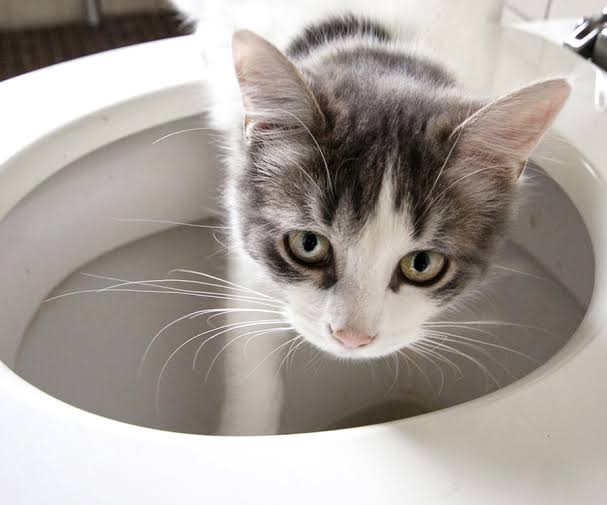

No more litter boxes. No more scooping. No more tracking litter across the floor.
Teaching your cat to use the toilet sounds like something out of a movie — but it’s completely real, and thousands of cat owners have done it successfully.
It takes patience and a slow, gradual approach. Rush it, and you’ll end up with a stressed cat doing their business on your carpet. Do it right, and you eliminate one of the most annoying parts of cat ownership forever.
Here’s exactly how to do it.
Table of Contents
- Before You Start — Is Your Cat a Good Candidate?
- What You’ll Need
- Step-by-Step: How to Train Your Cat to Use the Toilet
- How Long Does It Take?
- Common Mistakes to Avoid
- Should You Actually Toilet Train Your Cat? (The Honest Answer)
- FAQs
Before You Start — Is Your Cat a Good Candidate?
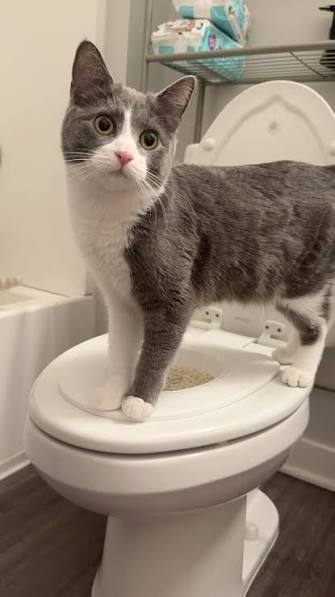
Toilet training works best for:
- Adult cats (1 year and older) — kittens are too young for this level of training
- Calm, confident cats that adapt easily to change
- Cats in good health with no joint problems or mobility issues
Avoid toilet training if your cat:
- Is a senior with arthritis — jumping onto a toilet seat is painful for them
- Is pregnant or recently gave birth
- Has any ongoing health issues your vet is monitoring
- Is extremely anxious or fearful of new things
What You’ll Need
- A cat toilet training kit (available on Amazon — brands like CitiKitty or Litter Kwitter are most popular)
- Flushable cat litter — for the transition period
- Treats for positive reinforcement
- A step stool near the toilet so your cat can climb up comfortably
- Patience — this takes weeks, not days
Step-by-Step: How to Train Your Cat to Use the Toilet
🟢 Step 1: Move the Litter Box to the Bathroom
Start by relocating your cat’s existing litter box to the bathroom where the toilet is.
Don’t put it right next to the toilet yet — just get them comfortable in that room first. Let them use it there for a few days with zero changes.
Key: Never rush past this step. Your cat needs to naturally associate the bathroom with bathroom time.
🟢 Step 2: Raise the Litter Box Gradually
Once your cat is comfortable, start raising the litter box — a few inches every 2 to 3 days.
Use stable platforms: thick books, wooden boards, or small boxes. The goal is to eventually bring the litter box up to toilet-seat height.
Critical rule: The platform must be completely stable and wobble-free. One slip or shake and your cat will refuse to go near it again — possibly for weeks.
🟢 Step 3: Place the Training Insert on the Toilet
When the litter box is at seat height, replace it with your toilet training kit insert. This sits directly inside the toilet bowl, under the seat.
Add a small amount of flushable litter to the insert. Leave a step stool next to the toilet.
Let your cat use this setup for at least one full week — or until they’re completely comfortable jumping up and balancing on the seat without hesitation.
Reward every successful visit with a treat and calm praise.
🟢 Step 4: Start Cutting the Holes
Most training kits have concentric rings marked on the insert. Start by punching out the smallest center hole — about 1 inch wide.
At the same time, slightly reduce the amount of litter in the tray.
Every 7 to 10 days, cut out the next ring — making the hole larger while reducing the litter a little more each time.
Your cat gradually adjusts to balancing over a larger opening with less litter underneath.
Go at your cat’s pace — not the kit’s suggested pace. If they look stressed or have accidents, go back one step immediately.
🟢 Step 5: Remove the Insert Completely
Once your cat is balancing comfortably over a large opening with very little or no litter — remove the insert entirely.
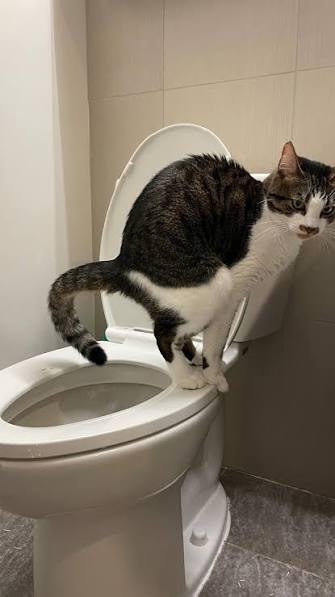
Your cat should now be eliminating directly into the toilet.
Congratulations. You officially have a toilet-trained cat. 🎉
How Long Does It Take?
| Phase | Timeframe |
|---|---|
| Moving litter box to bathroom | 3 – 5 days |
| Raising to toilet height | 1 – 2 weeks |
| Adjusting to training insert | 1 week |
| Gradually enlarging holes | 3 – 6 weeks |
| Full toilet use, no insert | Week 6 – 10 |
Total time: Most cats complete the process in 6 to 10 weeks. Some take longer — and that’s completely fine.
Common Mistakes to Avoid
❌ Moving Too Fast
This is the #1 reason toilet training fails. Cutting the hole too big too soon, or removing litter before your cat is ready, causes panic and sends them looking for any soft surface — usually your laundry or carpet.
Rule: If there’s an accident, go back one step. No exceptions.
❌ Closing the Bathroom Door
Your cat needs access to the toilet 24 hours a day. Use a doorstop to keep it open. Put a note on the door reminding family members or guests to keep it ajar.
❌ Punishing Accidents
Never scold your cat for missing the toilet. They don’t understand what they did wrong — they only learn to fear you. Stay calm, clean it up, and figure out if you moved too fast in the training.
❌ Using Non-Flushable Litter
Regular clay or silica litter will clog your toilet and cause expensive plumbing damage. During training, only use flushable, biodegradable litter.
❌ Teaching Them to Flush
It looks hilarious online. In reality, cats treat the flusher like a toy and will flush constantly — wasting water and potentially causing overflow. Don’t teach this.
Should You Actually Toilet Train Your Cat? (The Honest Answer)
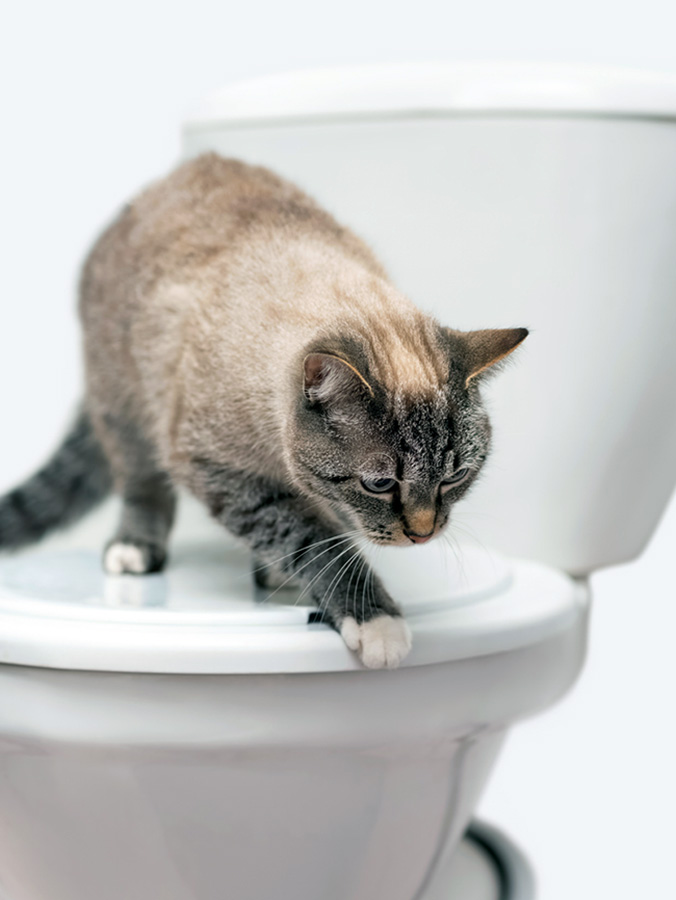
Toilet training is impressive — but it’s worth knowing the real trade-off.
The honest downside most articles skip:
When your cat uses a litter box, you naturally monitor their bathroom habits every day. You notice if they’re going less, if there’s blood, if the stool looks off. This is how cat owners catch UTIs, kidney disease, diabetes, and digestive issues early.
When they use the toilet — that information disappears. Everything flushes away unexamined.
Vets generally recommend: If your cat is young and healthy, toilet training is fine — just schedule regular vet checkups to compensate for the lost monitoring. If your cat is senior or has any health conditions, stick with the litter box.
FAQs
❓ Can any cat be toilet trained?
Most healthy adult cats can learn — but personality matters. Confident, adaptable cats take to it quickly. Anxious or set-in-their-ways cats may never fully accept it. Never force a cat that shows consistent stress signals.
❓ What if my cat falls in the toilet?
It’s rare but possible early in training. Always keep the toilet seat down except when your cat is using it. Never leave a toilet with the lid up overnight. Once trained, cats develop excellent balance on the seat.
❓ My cat was doing great, then suddenly stopped. Why?
Regression is normal — especially if something changed at home (new pet, new person, moved furniture, or a stressful event). Go back two steps in the training process and restart more slowly.
❓ Can I toilet train a kitten?
Not recommended. Kittens under 12 months are still developing physically and emotionally. Wait until they’re at least 1 year old and fully settled before starting toilet training.
❓ Do I still need a litter box anywhere in the house?
During training — yes. Keep the original litter box available in another room as a backup until your cat is fully reliable on the toilet. Once training is complete, most owners remove it entirely.