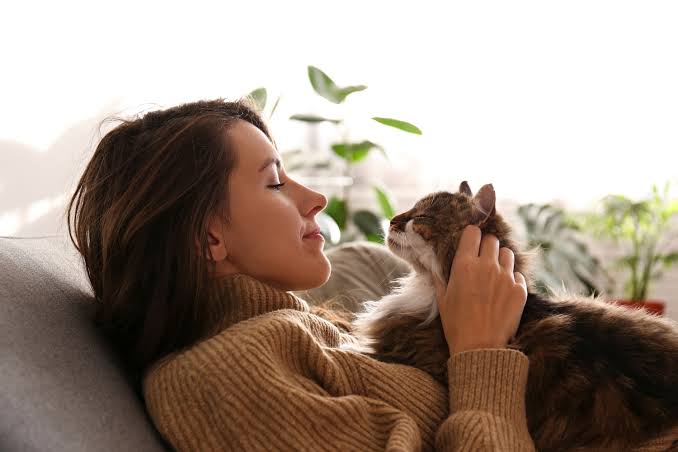

Cats have a reputation for being cold. Aloof. Indifferent to your existence unless a food bowl is involved.
And honestly? They work hard to maintain that image.
But here’s what cat owners know that everyone else doesn’t — cats are deeply emotional animals that form genuine, lasting bonds with the people they trust. They just express love in ways that are quieter, subtler, and much easier to miss if you don’t know what you’re looking for.
Science actually backs this up. Research published in Scientific Reports found that cats form secure attachment bonds with their owners — similar in structure to the bonds between human infants and their parents. They notice when you leave. They feel safer when you’re around. They choose you, every single day.
They just don’t make it obvious. That’s the whole thing with cats.
So here’s your translation guide. Every sign your cat loves you — decoded.
They Slow Blink at You
This one is so small that most people miss it entirely.
Your cat is sitting across the room. They look at you, let their eyes go heavy and half-closed, then blink slowly. Maybe they hold the blink for a beat longer than normal.
That’s called a slow blink — and in cat language, it’s the equivalent of a smile.
Here’s why it matters: in the feline world, a long, unblinking stare is a threat. It’s what cats do before a confrontation. Breaking that stare — blinking, looking away — signals that you mean no harm. That you’re relaxed. That you trust the other animal completely.
When your cat slow blinks at you from across the room, they’re sending you a deliberate signal. I see you. I’m comfortable. We’re good.
You can send it back. Look at your cat softly, let your eyes go heavy, and slow blink. Many cats will blink back. It’s the closest thing to a silent “I love you” that crosses the species barrier.
They Head-Butt You
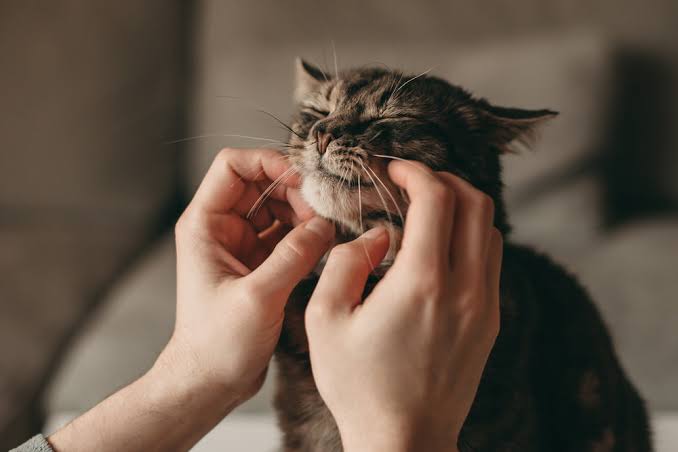
Your cat walks up and presses their forehead directly into your face, your hand, or your chin. Sometimes they rub their cheeks along you. Sometimes they weave through your legs like they’re trying to trip you on purpose.
None of this is accidental.
Cats have scent glands on their cheeks, forehead, lips, and chin. When they rub against you, they deposit pheromones — a chemical signature that is completely unique to them. They’re not just marking you as territory. Behaviorists call this “bunting,” and they describe it as a social bonding behavior — a way of blending your scent with theirs to create a shared group identity.
Translation: by rubbing their face on you, your cat is saying you belong to my circle. You are one of mine.
There are cats who do this to furniture and walls too — marking their space. But a cat who specifically seeks out you to rub against, who comes over and initiates the contact, is engaging in something much more personal than territorial marking.
Their Tail Goes Up When They See You
Watch your cat’s tail the next time you walk into the room.
If it shoots straight up — sometimes with a little curl or hook at the very tip — that’s a greeting. A good one. The tail-up position in cats is associated with confidence and positive emotional state. It’s the body language of a cat that is happy to see you.
The little hook at the tip? Think of it as a wave.
A cat that runs toward you with tail held high the moment you come through the door is showing you something dogs get credit for but cats do just as genuinely. They missed you. They’re glad you’re back. The tail is just more subtle about it than a Labrador’s whole-body wiggle.
They Bring You Things
This one makes most people uncomfortable — especially when the gift is something small and formerly alive.
But understand what’s happening. Cats in the wild teach their young to hunt by bringing prey back to the nest. When a cat brings you something — a toy, a sock, an unfortunate bug — they are treating you as part of their family. They’re sharing.
They think you need training. They are generously providing it.
If your cat regularly drops toys at your feet, carries things to where you’re sitting, or parades around with something in their mouth specifically to get your attention — they are engaging with you as a social equal. As someone worth bringing gifts to.
It’s weird. It’s also genuinely touching once you understand the motivation.
They Follow You Everywhere
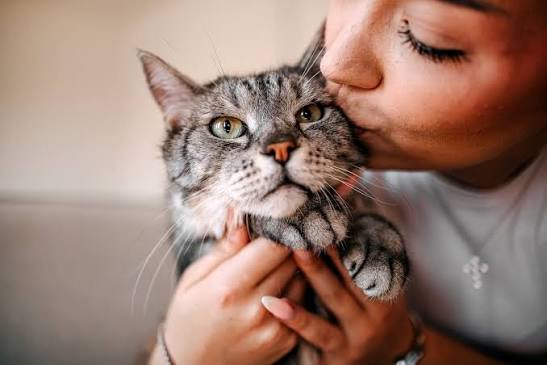
The bathroom. The kitchen. The room you just moved to for no reason. Your cat materializes beside you within two minutes of you going anywhere.
There’s a word for a cat that does this: attached.
Cats manage their energy carefully. They’re light sleepers by instinct, always partially aware of their surroundings. For a cat to leave a warm, comfortable spot and follow you across the house — that’s a choice. They want to be near you specifically. Not just near a warm body. Near you.
Some cats will sit outside the bathroom door and wait. Some will position themselves so they always have a sightline to wherever you are. Some will follow you to the kitchen only to sit down and watch you like a small, judgmental supervisor.
All of it means the same thing: your presence is something they seek out actively.
They Sleep on You — or Very Close to You
Sleep is when animals are most vulnerable. In the wild, where you sleep matters enormously. You sleep near the animals you trust with your life.
A cat that sleeps on your lap, on your chest, or pressed against your legs is making a statement with their body. This person is safe. I can let my guard down completely here.
The closer they sleep to your face, the more profound the trust tends to be. Your head is warm, it carries your strongest scent, and being near it means being near the most recognizable part of you. Cats that sleep on pillows right next to your head — or on your actual head, which is a thing cats absolutely do — are deeply bonded.
If your cat doesn’t sleep on you but consistently chooses to sleep in the same room, within a few feet? Still counts. They’re choosing your space over all the other spaces available to them.
They Knead You
If you’ve had a cat fall asleep on your lap while rhythmically pushing their paws in and out like they’re kneading bread — you’ve witnessed one of the most honest displays of contentment a cat can produce.
Kneading begins in kittenhood. Newborn kittens press on their mother’s belly to stimulate milk. The motion is paired, neurologically, with warmth and safety and being completely cared for.
Adult cats don’t need to do this anymore. But when they feel that same deep comfort — that sense of safety they haven’t felt since they were small — the behavior resurfaces. Involuntarily, automatically, the paws start pressing.
If your cat kneads you, their brain has decided you are that safe place. That the feeling they have on your lap is the same feeling they had as a kitten being cared for.
That’s not something they can fake.
They Meow at You Specifically
Here’s something interesting: adult cats in the wild almost never meow at each other. It’s a sound primarily used by kittens to communicate with their mother.
As cats grew alongside humans over thousands of years, they developed — and kept — this vocalization to communicate specifically with us. The meow is essentially a tool they built to talk to humans, because they figured out that we respond to it.
Your cat has probably developed a specific set of sounds just for you — a trill for hello, a short meow for “come here,” a longer one for “I want something,” a chirp when they’re happy to see you. These aren’t random. They’ve customized their communication for your specific responses.
A cat that talks to you is a cat that considers you worth talking to. That’s not a small thing.
They Show You Their Belly
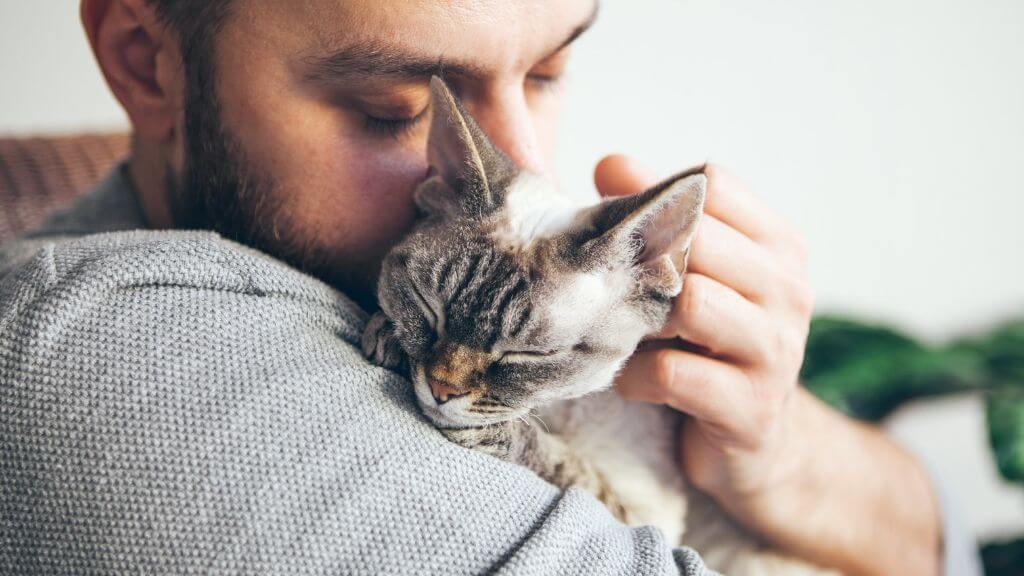
The belly is where cats keep everything important. All the vital organs, everything that keeps them alive, is right there — completely unprotected.
In the animal world, nothing exposes its soft underbelly to something it doesn’t completely trust.
When your cat rolls over near you and lets their stomach face the ceiling, they’re not necessarily asking you to rub it. They’re showing you they feel safe enough to be fully vulnerable in your presence. They’re not braced for anything. They’re not ready to defend themselves. They’ve decided there’s nothing to defend against.
It’s trust made physical.
A Quick Reference
| What Your Cat Does | What It Actually Means |
|---|---|
| Slow blink at you | “I trust you. We’re at peace.” |
| Head-butt or face rub | “You are part of my social group.” |
| Tail straight up when they see you | “I’m happy you’re here.” |
| Brings you things | “I am teaching you because I care.” |
| Follows you everywhere | “I want to be near you specifically.” |
| Sleeps on you or very close | “You are my safe place.” |
| Kneads on your lap | “You make me feel like nothing can hurt me.” |
| Meows and talks to you | “You are worth communicating with.” |
| Shows you their belly | “I am completely at ease with you.” |
FAQs
My cat never sits on my lap. Does that mean they don’t love me?
Not at all. Some cats are simply not lap cats — it’s a personality trait, not a measure of affection. Watch for the other signs: following you, sleeping nearby, slow blinking, talking to you. A cat doesn’t have to be physically on you to be bonded to you.
My cat ignores me when I come home. Are they upset?
Probably not. Some cats are naturally low-key greeters. Watch for the tail position when they do look up — if it rises slightly when they see you, they registered your arrival positively. They just express it quietly.
Does purring always mean my cat loves me?
Purring usually signals contentment, but cats also purr when stressed or in pain — it’s a self-soothing mechanism. Context matters. A cat purring while relaxed on your lap is happy. A cat purring while hunched and withdrawn may be unwell.
How do I make my cat love me more?
Respect their pace. Never force interaction. Let them come to you first. Slow blink at them when you make eye contact. Provide a consistent routine — cats bond deeply with people who make their world predictable and safe. The more secure they feel, the more affection they naturally show.
My cat bites me sometimes after seeming affectionate. Why?
This is called petting-induced aggression. Cats have a stimulation threshold — when touch crosses it, they bite. It’s not personal and it doesn’t mean they don’t love you. Learn to read their pre-bite signals: skin rippling, tail flicking, ears rotating back. When you see those, stop petting and let them reset.
Final Thoughts
Cats don’t love the way dogs love. They don’t wag, they don’t jump, they don’t need you to know every five minutes that you’re their favorite person.
But they do love.
They show it in blinks and head-butts and the fact that they chose your lap out of every surface in the house. In the way they talk to you in sounds they invented specifically for humans. In the way they sleep, fully vulnerable, in the place where you are.
It’s quieter than a dog’s love. It’s also, in its own way, more deliberate.
Your cat picked you. And they keep picking you, every single day.