
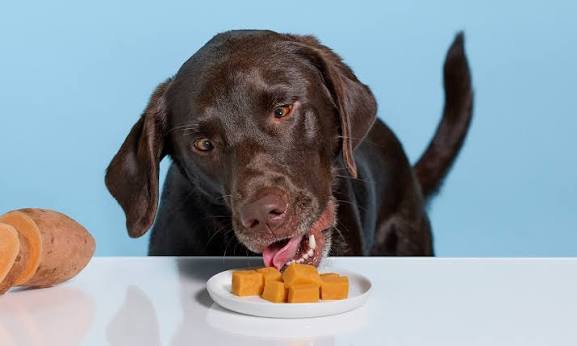

Your dog is parked under the table, eyes locked on the sweet potato casserole, and someone just said, “It’s only a sweet potato, what’s the harm?” So, can dogs eat sweet potato casserole? Not the casserole itself. Plain sweet potato is a fine treat, but the butter, sugar, marshmallows, pecans, and spices that make the holiday version taste good are the problem.
Can Dogs Eat Sweet Potato Casserole? The Short Answer
No, dogs shouldn’t eat sweet potato casserole. Plain, cooked sweet potato is safe in moderation, but a typical casserole adds butter and sugar, and many recipes add marshmallows, pecans, or nutmeg. Veterinarians at PetMD say marshmallow-topped casserole can upset a dog’s stomach and can be toxic if it contains chocolate or xylitol. A small lick off a fork is unlikely to cause harm, but don’t serve it on purpose.
Below you’ll find what’s actually in the dish, a table of other Thanksgiving sides, a safe way to share sweet potato, and what to do if your dog already got into the pan.
Why Is Sweet Potato Casserole Bad for Dogs?
Sweet potato isn’t the villain. According to PetMD, sweet potatoes are a good source of B vitamins, vitamin A, and fiber. The trouble is everything added to them.
Butter and fat
Casserole recipes lean on butter and often cream. PetMD warns that too much fat can cause vomiting, diarrhea, and bloating in dogs. High-fat table scraps can also trigger pancreatitis, an inflamed pancreas that can become serious fast. Dogs who’ve had it before are at higher risk, and one pet-health guide hosted on AAHA’s site names miniature schnauzers, Yorkshire terriers, and dachshunds as higher-risk breeds.
Sugar and marshmallows
Brown sugar, syrup, and marshmallows pile on sugar with no benefit to your dog. The bigger worry is hidden ingredients. PetMD says sweet casseroles can be toxic to dogs if they contain chocolate or xylitol, and it warns that cranberry sauce may contain artificial sweetener. Check the label on anything store-bought before a crumb gets near the floor.
Pecans
Pecan topping is the ingredient people forget about. AKC Chief Veterinarian Dr. Jerry Klein says pecans are “harmless to humans” but “shouldn’t be given to dogs.” AKC explains that pecans contain juglone, which can cause severe vomiting and diarrhea, and that they can grow molds producing mycotoxins linked to tremors and seizures. They’re also high in fat and can lead to pancreatitis. Klein adds that one or two pieces most likely won’t cause a major problem, but call a vet if your dog eats them.
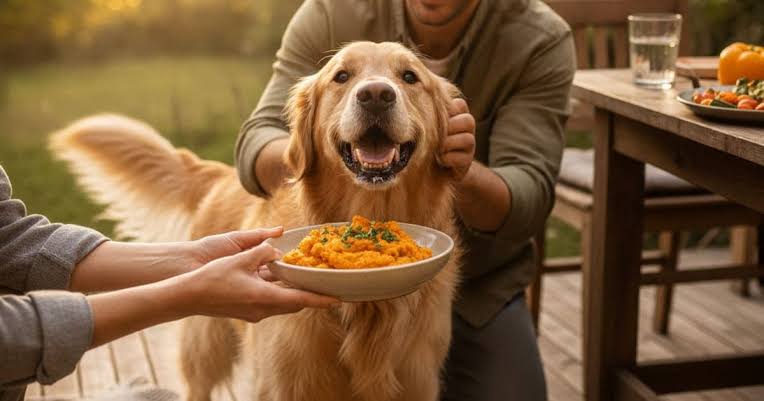
Nutmeg and other spices
PetMD says nutmeg contains myristicin, a toxin that can poison dogs. Poisoning can happen with as little as a teaspoon of ground nutmeg, and signs can last up to 48 hours. PetMD notes that foods with nutmeg usually contain too little to poison a dog but can still upset the stomach, and it advises against feeding dogs anything with nutmeg.
What Other Thanksgiving Sides Can Dogs Eat?
Use this as a cheat sheet before you fill a plate. It follows PetMD’s holiday food guide, written by Jennifer Coates, DVM, and reviewed by Hannah Hart, DVM.
| Dish | Safe for dogs? | Why |
| Plain baked sweet potato | Yes, in small amounts | Cooked, skinless, no butter or sugar |
| Sweet potato casserole | No | Butter, sugar, marshmallows, nuts, spices |
| Stuffing | No | Often contains onions, garlic, raisins, or grapes |
| Cranberry sauce | No | High in sugar, may contain artificial sweetener |
| Mashed potatoes | Usually no | Typically made with garlic, onion powder, salt, butter, and cream |
| Gravy | No | High in fat and sodium, may contain toxic ingredients |
| Green bean casserole | No | Plain green beans are fine, the casserole isn’t |
| Pumpkin pie | No | Spices can cause upset stomach or pancreatitis |
| Plain turkey meat | Yes, in small amounts | Our advice: skinless, boneless, unseasoned |
On turkey: the AKC says turkey on its own isn’t toxic to dogs. The problem is how we cook it. Butter, oil, seasoning, and stuffing can cause digestive upset and pancreatitis, and cooked poultry bones are brittle and dangerous if swallowed.
How Can You Share Sweet Potato With Your Dog Safely?
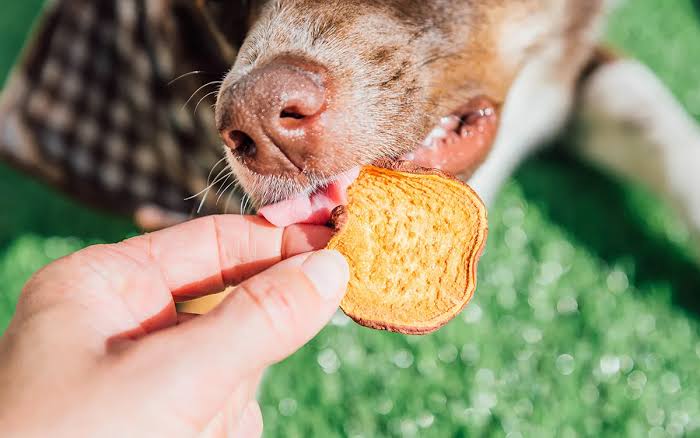
If you want your dog to have something from the sweet potato dish, set aside a bite before any seasoning goes in. AKC’s guidance for dogs boils down to a few rules:
- Cook it. Raw sweet potato is hard to chew and can upset the stomach or cause a blockage.
- Peel it. AKC says leaving the skin on makes digestion harder.
- Keep it soft. Mash or cut it small to lower the choking risk, especially for dogs that gulp.
- Keep it plain. No butter, sugar, salt, spices, or marshmallows.
- Go small. AKC stresses moderation, because the right amount depends on your dog’s size, activity level, and health. Too much vitamin A can weaken bones and muscles.
- Check with your vet first if your dog is diabetic, overweight, or inactive. AKC says these dogs should get only a minimal amount because sweet potatoes have a high glycemic index.
One more note from AKC: recent research suggests sweet potatoes, though not poisonous, may not be right as a main part of a dog’s diet, and the FDA has looked at a possible link between certain potato-and-legume-heavy foods and dilated cardiomyopathy. That’s about a daily diet, not a spoonful at the holidays. Think of sweet potato as a treat, not a staple.
What Should You Do If Your Dog Ate Sweet Potato Casserole?
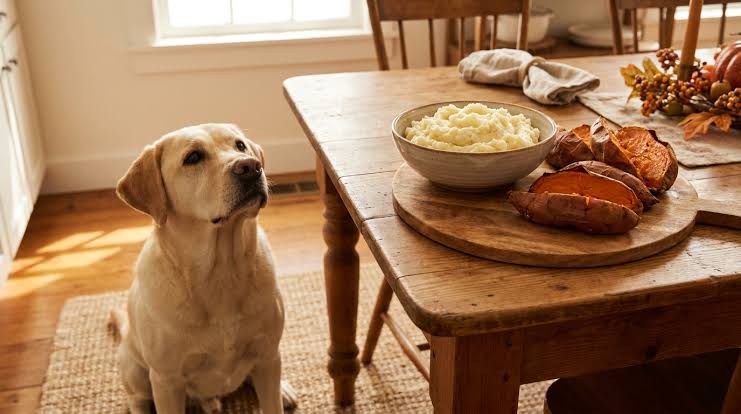
Stay calm, take the dish away, and work out what was in it.
- A lick or a small bite: Watch your dog for the next day. Expect nothing, or a mild upset stomach.
- A big serving, or a dish with pecans, nutmeg, chocolate, or a sugar-free ingredient: Call your vet, an emergency clinic, or the Pet Poison Helpline at 855-764-7661 (a fee may apply). PetMD says to bring the food packaging and not to make your dog vomit unless a vet tells you to.
- Signs of trouble: Repeated vomiting, diarrhea, loss of appetite, and lethargy are signs of pancreatitis, according to AKC. The AAHA-hosted guide also lists abdominal pain, fever, and a swollen belly. Any of these after a holiday meal needs a vet, because acute pancreatitis can be life-threatening.
Holiday evenings are when regular clinics close, so find your nearest 24/7 emergency vet before you need one. Our guide to 24/7 emergency vets is written for Texas, but the checklist of costs and questions works anywhere.
How Do You Keep Your Dog Out of the Food Altogether?
Prevention beats a midnight vet bill. These help most:
- Give your dog their own plate. A bit of plain turkey or sweet potato, or their usual dog food, in their bowl keeps them busy.
- Brief your guests. Ask everyone, especially kids, not to slip food to the dog. Most holiday scraps come from well-meaning hands.
- Keep the trash closed. Turkey bones and drippings are in there, and so are casserole dishes.
- Clear the counters. Leftovers on the counter are an invitation. Put them in the fridge before you sit down.
- Practice “leave it” ahead of time. Our puppy training guide covers the basics, and it works for adult dogs too.
- Give them a chew or a puzzle toy. A busy mouth is a quiet dog.
Frequently Asked Questions
Can dogs eat sweet potato casserole with marshmallows?
It’s best to skip it. Marshmallows add sugar, and PetMD warns that casseroles can be toxic if they contain chocolate or xylitol. Check the ingredients if your dog already ate some, and call your vet if you see a sugar-free sweetener.
Can dogs eat plain baked sweet potato?
Yes, in moderation. Cook it, peel it, and serve it soft and plain. Dogs that are diabetic, overweight, or inactive should get only a very small amount, so ask your vet first.
Can dogs eat candied yams?
Candied yams are usually made with butter and plenty of sugar, so they raise the same concerns as casserole. Our advice is to offer plain sweet potato instead.
My dog ate sweet potato casserole. What should I do?
Check what was in it and how much your dog ate. A small taste usually needs only watching. A large amount, or any pecans, nutmeg, chocolate, or sugar-free ingredients, means calling your vet or the Pet Poison Helpline. Watch for vomiting, diarrhea, and lethargy.
Can dogs eat sweet potato pie or pumpkin pie?
No. PetMD says pumpkin pie and its filling can cause an upset stomach or pancreatitis because of the spices. Plain pumpkin or plain sweet potato is the better way to share the flavor.
The Bottom Line
Share the sweet potato, not the casserole. Before dinner, bake a plain one, peel it, and keep a few soft bites aside for your dog. If your dog already got into the dish and you see vomiting or lethargy, call your vet. For more safe-food answers, read can dogs eat bananas, and browse the dog food guides on PetsFuzz.



Pingback: Can Dogs Eat Candied Yams? What to Know Before Sharing - PetsFuzz
Pingback: Can Dogs Drink Eggnog? Risks, Signs, and What to Do - PetsFuzz