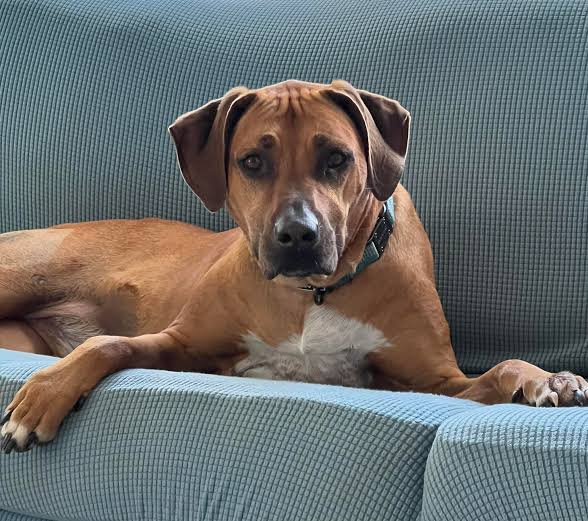

You flop onto the couch, your dog flops onto the rug, and out comes a long, theatrical groan like a tired old man. So why does my dog groan when he lies down? Most of the time it’s a happy sigh of relief, but a groan that happens every single time can point to sore joints or something more serious. Here’s how to tell the difference.
Why Does My Dog Groan When He Lies Down? The Short Answer
Dogs groan when they lie down most often because they’re content or tired, and one groan as they settle in is normal. A groan that comes with every position change, or alongside stiffness, limping, or restlessness, often signals pain, and arthritis is a frequent culprit, especially in older dogs. Belly problems and age-related confusion can cause it too, so the pattern matters more than the sound.
Below you’ll find the seven causes, a table that separates a happy groan from a pain groan, the signs that mean a vet call, and simple changes that make lying down easier.
What Are the 7 Reasons Dogs Groan When Lying Down?
The first three are usually harmless. The last four deserve a closer look.
1. They’re content
The happy groan is the easy one. Your dog has found a comfy spot, the day is winding down, and their body finally lets go. It’s usually a long, low exhale, more sigh than moan, paired with a loose body and soft, half-closed eyes. Plenty of dogs make the same sound when you rub their ears.
If it happens once as they settle and everything else about your dog is normal, take it as a compliment.
2. They’re tired
After a long hike, a day at the dog park, or a road trip, a groan is just the sound of a worn-out body. Think of the noise you make when you sit down after a double shift. Tired groans fade once your dog has rested, and they don’t show up on lazy days.
3. They’re just a vocal dog
Some dogs narrate everything. They grumble at the mail carrier, mutter when you stop petting them, and groan when they lie down. If your dog has been talkative since puppyhood, the noise is probably just their voice, not a symptom.
4. Their joints hurt
This is the cause to take seriously. Arthritis makes lowering into a lie-down and getting back up uncomfortable, and a groan is one way dogs say so. According to Cornell’s veterinary college, osteoarthritis commonly affects dogs and isn’t just a disease of senior dogs. Both the American Kennel Club and VCA animal hospitals list groaning when lying down or getting up among the signs of pain.
Look for these companions:
- Trouble getting up from lying down
- Slowing down on walks or quitting early
- Skipping stairs or hesitating before jumping onto the couch or into the car
- Licking or chewing at a joint
- Slipping on smooth floors
Our take: a dog who groans every time they lie down and has also slowed down isn’t “just getting old.” That’s likely pain you can treat. Many dogs hide discomfort, too, so a quiet dog isn’t automatically a comfortable one.
5. They’re having growing pains
Young dogs, especially medium to giant breeds, can go through painful episodes while their bones grow. The usual signs are limping and yelping when a leg is touched. It’s temporary, but have a vet confirm that’s all it is, and ask how much hard exercise is safe while your puppy grows.
6. Something is wrong in their belly
A groan can come from the gut. Gas, constipation, or an upset stomach are common, mild causes. At the serious end is ascites, a buildup of fluid in the abdomen that can be linked to liver or heart disease, cancer, or infection in the belly.
A groan that gets worse when your dog changes position is a clue. Add a swollen or tight belly, vomiting, or trouble breathing, and it’s no longer a wait-and-see situation.
7. They’re confused or groggy
Older dogs can develop canine cognitive dysfunction, a condition similar to dementia in people. A confused dog may groan, pace, or struggle to settle down. Watch for other changes too, like getting stuck in corners or sleeping at odd hours. Groaning can also linger briefly after anesthesia from surgery or a dental procedure, and it should fade as the drugs wear off; if it doesn’t, call your vet.
How Can You Tell a Happy Groan From a Pain Groan?
Listen to the sound, but watch the dog. This table is a quick check.
| Clue | Usually harmless | Worth a vet visit |
| Sound | One long, low exhale as they settle | Repeated, sharp, or paired with whimpering |
| Timing | Occasionally, mostly when they’re tired | Nearly every time they lie down or get up |
| Body | Loose, relaxed, soft eyes | Stiff, shifting positions, getting up and lying down again |
| Movement | Hops up easily and uses stairs fine | Slow to rise, avoids stairs and jumps, slips on floors |
| Behavior | Eating, playing, and sleeping as usual | Less play, less appetite, irritability, licking a joint |
| Belly | Soft and normal | Swollen, tight, or sensitive to touch |
If most of your dog’s answers land in the right-hand column, book a visit.
When Should You Call the Vet About Dog Groaning?
Some situations can’t wait. Go to an emergency vet right away if your groaning dog has:
- A swollen or tight belly
- Retching with nothing coming up
- Trouble breathing
- Collapse or sudden, severe pain
Book an appointment soon if the groaning comes with:
- Trouble getting up, stiffness, or limping
- Groaning every time they lie down or change position
- Loss of appetite or unusual tiredness
- Yelping when you touch a certain spot
- Heavy panting while resting, or restlessness at night
- New grumpiness or snapping when handled
Take a 20-second video of the groan and the way your dog gets up. Dogs often act differently in an exam room, and the video shows your vet what you see at home. Shaking and trembling are another sign of pain, and we break down the causes in why your dog is shaking.
One firm rule: never give your dog human pain relievers. Many are dangerous to dogs. Vets can prescribe dog-specific pain medication, and it can make a big difference, but it needs the right dose and monitoring.
What Can You Do at Home to Make Lying Down Easier?
Get a vet exam first, so you know what you’re treating. Then these changes help dogs with achy joints, and they cost little:
- Add traction. Non-slip rugs or runners on hardwood and tile give sore legs something to grip.
- Use ramps or steps. A ramp to the couch, the bed, or the car saves their joints from a daily jump.
- Upgrade the bed. Thick, supportive foam beats a thin pad when your dog is lowering themselves down. Our dog bed buying guide covers what to look for.
- Watch their weight. Extra pounds add force to joints, and Cornell lists weight control as a core part of managing arthritis.
- Choose gentle exercise. Leash walks and swimming are easier on joints than hard fetch or long runs.
- Keep a short log. Note when the groaning happens and what your dog was doing. Patterns help your vet.
Frequently Asked Questions
Why does my older dog groan when lying down?
Pain from arthritis is a common cause in older dogs, and age-related confusion can also play a part. Occasional contented groans are normal at any age. If your older dog groans every time they lie down or get up, or seems stiff, schedule a vet visit. Our guide to how long dogs live explains what to expect as dogs age.
Is it normal for a dog to groan when lying down?
Yes, an occasional groan is normal. Dogs groan from contentment, tiredness, or habit. It becomes a concern when it happens every time, or when it comes with limping, stiffness, restlessness, appetite changes, or a swollen belly.
Why does my dog groan when I pet him?
Most often it’s pleasure, the same relaxed sound dogs make when they settle in. If your dog flinches, yelps, or pulls away when you touch a particular spot, the groan may be pain, and a vet should check that area.
Why does my puppy groan when lying down?
Usually it’s just settling in or being sleepy. Puppies, especially medium to giant breeds, can also have growing pains. If your puppy limps or yelps when a leg is touched, have a vet take a look.
Can I give my dog something for the pain?
Not without talking to your vet. Human pain relievers can be dangerous for dogs. Your vet can prescribe dog-safe options, and long-term pain medication usually calls for regular check-ups and blood work.
The Bottom Line
Listen to the pattern, not the noise. One groan at bedtime is a happy dog. Groans that happen every time, or that come with slowing down, mean it’s time to get a vet involved. Record a short video of the next one, bring it to your appointment, and check the floors and bed while you wait for it. For more help reading your dog’s signals, browse the dog health guides on PetsFuzz.