
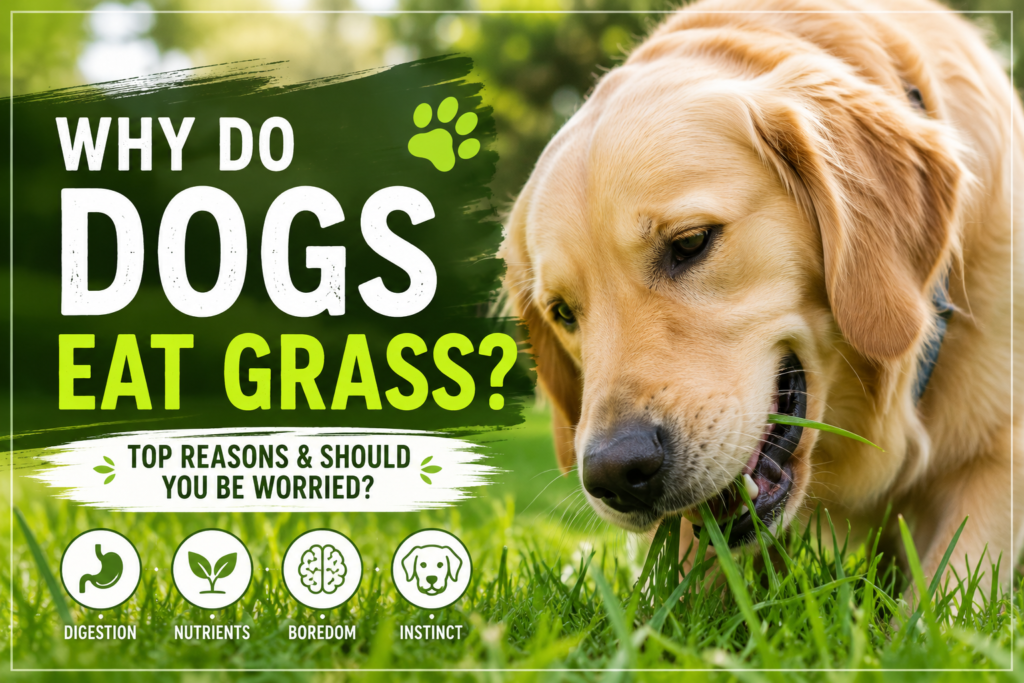

You’re out on a regular morning stroll, and suddenly your four-legged buddy stops in their tracks. Nose down, tail wagging, they start munching on fresh green lawn blades like a miniature cow.
If you’re wondering, “Why do dogs eat grass?” you’re definitely not alone. It’s one of the most common questions pet parents ask their vets.
The quick answer? In most cases, it’s completely normal canine behavior. But to understand why your pup loves lawn grazing, let’s look at what’s really going on inside their body and mind.
1. The Upset Stomach Theory: Myth vs. Reality
For years, the go-to advice was that dogs only eat grass to make themselves throw up when they have an upset tummy.
While that does happen, it’s actually less common than people think:
- The Reality: Studies by veterinary researchers show that less than 10% of dogs show signs of illness before eating grass, and only about 25% vomit afterward.
- The Tickle Effect: Dogs don’t chew grass down to a paste; they swallow it whole. The rough blades tickle their stomach lining and throat, which can trigger a natural gag reflex.
If your dog occasionally munches a few blades and stays happy and active, they probably don’t have an upset stomach at all.
2. A Taste for Fresh, Sweet Greens
Sometimes the simplest explanation is the right one: dogs actually like the taste.
Have you noticed your dog grazes more in the spring and early summer? Freshly sprouted grass is tender, full of moisture, and carries a crisp, slightly sweet flavor. To a curious dog exploring the world through their mouth, a patch of clean lawn is just an interesting outdoor snack.
3. Instinct Left Over from Wild Ancestors
Our dogs sleep on comfy sofas now, but their digestive systems carry wild DNA.
Wolves, coyotes, and wild dogs are natural scavengers. When they catch prey in the wild, they consume the whole animal—including the stomach contents filled with plants, herbs, and wild berries.
Stool tests on wild wolves regularly show plant matter. Eating vegetation is an instinctive foraging habit that domestic dogs inherited from their wild ancestors.
4. They Might Need More Fiber in Their Diet
Dogs require a balanced diet, and just like humans, they need adequate fiber to keep their digestive systems running smoothly.
Grass is rich in insoluble fiber. If your dog isn’t getting enough roughage, they might instinctively seek out greens to help move things through their intestines.
Pet Parent Tip: If you think your dog needs more dietary fiber, ask your vet about adding safe toppers to their meals, such as a spoonful of plain canned pumpkin (not pie mix) or steamed green beans.
5. Boredom and Sensory Seeking
A dog left in a backyard without interactive toys or mental stimulation will find ways to keep themselves occupied.
Nibbling grass, chewing small sticks, or pulling at roots gives them sensory feedback and passes the time. In behavioral terms, repetitive chewing of non-food items can also be a mild form of pica, which can flare up when a dog feels anxious or under-stimulated.
Is It Safe for Dogs to Eat Grass?
Grass itself isn’t toxic to dogs, but what’s on the grass can be dangerous. Keep an eye out for these three major risks:
- Lawn Chemicals: Weed killers, fertilizers, and pest sprays can cause serious chemical poisoning. Never let your dog graze on treated lawns.
- Intestinal Parasites: Public parks and sidewalk strips can harbor microscopic parasite eggs (like roundworms and hookworms) left behind by infected animals.
- Sharp Weeds: Foxtails and thorny weeds can get stuck in your dog’s gums, throat, or paws, causing painful abscesses.
When Should You Call the Vet?
While normal grazing is harmless, watch out for these warning signs:
| Safe Grazing | Warning Sign (Call Your Vet) |
| Nibbles a few blades casually | Frantically gulping down mouthfuls of grass and dirt |
| Active, playful, and alert | Repeated vomiting or dry heaving |
| Normal appetite and firm stool | Diarrhea, lethargy, or refusing regular food |
| Grazing on untreated, clean lawn | Chewing on grass treated with chemical sprays |
How to Stop Your Dog from Eating Grass
If your yard is safe, you don’t necessarily have to stop them. But if you want to curb the habit, try these simple steps:
- Bring Healthy Veggie Snacks: Swap yard grass for crunchy, dog-safe alternatives like raw carrot sticks, cucumber slices, or celery.
- Turn Walks into “Sniffaris”: Give your dog plenty of time to sniff tree trunks, bushes, and posts. Mental stimulation reduces grass-chewing out of boredom.
- Practice the “Leave It” Command: Carry high-value treats on walks. The moment your dog dips their nose to graze, say “Leave it,” and reward them when they look up at you.



Pingback: Bravecto for Dogs: The Complete Guide to Dosages, Safety, and Long-Lasting Protection - PetsFuzz