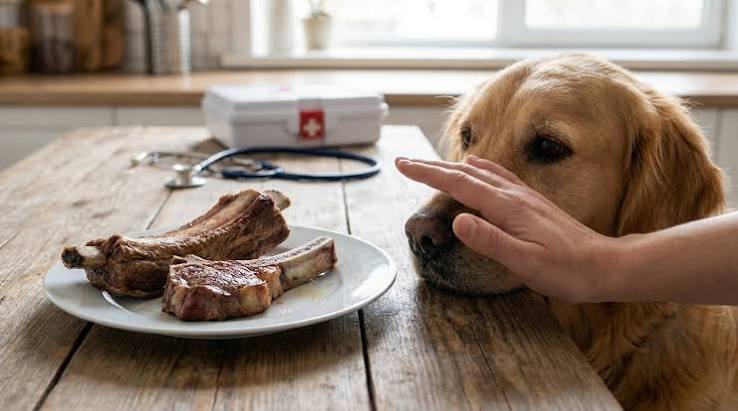

The roast comes out of the oven, the whole house smells like a steakhouse, and your dog has already claimed the best spot beside the carving board. So, can dogs eat prime rib? A small piece of plain, well-cooked beef is fine as a treat. But prime rib as it’s served at the table, with its fat, seasoned crust, bones, au jus, and horseradish sauce, is a different story.
Can Dogs Eat Prime Rib? The Short Answer
Dogs can have a small amount of plain, fully cooked, trimmed beef, but they shouldn’t eat prime rib the way people serve it. PetMD says steak should be cooked, never fed raw, and kept free of garlic, onion, excessive salt, butter, and oil. Fatty cuts can cause digestive upset or pancreatitis, and the rib bones are dangerous. Our advice: skip the roast on the table and cook your dog a small, plain piece of beef instead.
Below you’ll find what makes prime rib risky, how much beef is okay, what to do if your dog got into the roast, and how to keep the carving board dog-proof.
Why Is Prime Rib Risky for Dogs?
Fat
Prime rib is a rich, marbled cut with a fat cap. PetMD says fatty cuts of beef can cause digestive upset or pancreatitis, an inflamed pancreas that can become serious fast, and advises trimming any excess fat before cooking. AKC says rib bones are high in fat, and that dogs “aren’t built to handle this amount of saturated fat.” PetMD says that fat left on rib ends can cause pancreatitis, too.
The seasoned crust
Many recipes rub the roast with salt, pepper, and herbs, and many add garlic. PetMD says to avoid garlic, onion, and excessive salt, which are toxic or can make dogs sick. It also warns against butter and oil. A garlic-herb crust is the part of the roast to keep away from your dog.
Au jus and horseradish sauce
Pan juices are salty and fatty, and some recipes add onion or garlic, so check what went in. Horseradish sauce is a separate concern. Hepper, in an article reviewed by Dr. Amanda Charles, says horseradish is “technically non-toxic for dogs,” but it’s not something to offer. It contains a compound that can irritate the mouth, nose, and throat, and can cause mild to severe stomach irritation.
Bones
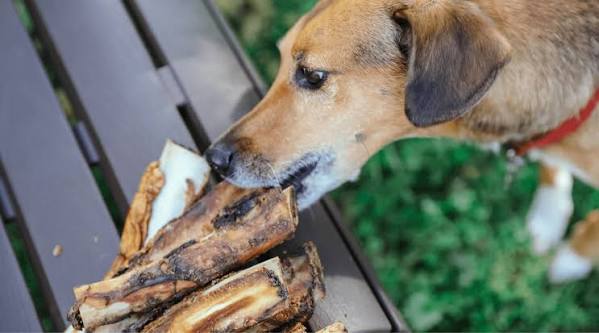
The bones in a bone-in rib roast are the most dangerous part. PetMD, in an article reviewed by Jo Cornett, DVM, says no animal bones are safe for dogs and that cooked bones can be an even bigger threat than raw ones. AKC says cooked bones “splinter into shards” that can injure the mouth, throat, or intestines, and that obstructions “can quickly lead to severe illness and death.” Cracked teeth are another risk.
Undercooked meat
Prime rib is often served medium-rare. PetMD says not to feed dogs raw steak, and that at a minimum it should be seared. It recommends cooking to the USDA minimum of 145°F to reduce bacterial risk. Our take: a pink center isn’t a good fit for dogs, which is one more reason to cook a separate plain piece.
Which Part of the Roast Is Okay?
| Part of the meal | Safe for dogs? | Why |
| Plain, fully cooked beef, trimmed of fat | Yes, in small amounts | Lean cooked meat, no seasoning |
| Fat cap and gristle | No | Pancreatitis risk |
| Seasoned crust | No | Salt, and often garlic or onion |
| Au jus and gravy | No | Salty, fatty, and may contain onion or garlic |
| Horseradish sauce | No | Irritates the mouth and stomach |
| Rib bones | No | Splinters, choking, blockage |
| Medium-rare center | Avoid | Undercooked meat can carry bacteria |
How Much Beef Can Dogs Have?
If you cook a small, plain piece of beef for your dog, keep it a treat. PetMD says treats should stay under 10% of daily calories. It suggests starting with one or two small bites for a first try, and gives these approximate amounts for steak:
| Dog weight | Pieces of plain cooked beef |
| 2 to 20 lb | About 1 small piece |
| 21 to 30 lb | 1 to 2 pieces |
| 31 to 50 lb | 2 to 4 pieces |
| 51 to 90 lb | 4 to 6 pieces |
| 91 lb and up | 6 to 8 pieces |
PetMD says dogs with pancreatitis, obesity, heart disease, or digestive problems should generally avoid steak or stick to their vet-approved diet. Ask your vet if you’re unsure.
What Should You Do If Your Dog Ate Prime Rib?
First, work out what your dog ate: meat only, fat, crust, sauce, or a bone.
- A scrap of meat or a small bite: Watch your dog for the next day. Expect nothing, or a mild upset stomach.
- A lot of fat, or a rich serving: Watch for the signs of pancreatitis. PetMD lists vomiting, diarrhea, lethargy, loss of appetite, drooling, and abdominal pain, and says to call your vet if a dog eats too much steak and shows these.
- Seasoned with garlic or onion: Call your vet or the Pet Poison Helpline at 855-764-7661 (a fee may apply). PetMD says to call if a dog eats steak seasoned with garlic or onion.
- Swallowed a bone: PetMD says to seek immediate veterinary care, from your vet or a local emergency clinic. Signs include vomiting, lethargy, trouble breathing, collapse, diarrhea or constipation, pale gums, and abdominal pain. If your dog is choking, with gagging, coughing, drooling, or pawing at the face, treat it as an emergency.
Holiday evenings are when regular clinics close, so look up a 24/7 emergency vet before you need one. Our guide to emergency vets covers Texas, but its checklist of costs and questions works anywhere.
How Do You Keep Your Dog Away From the Roast?
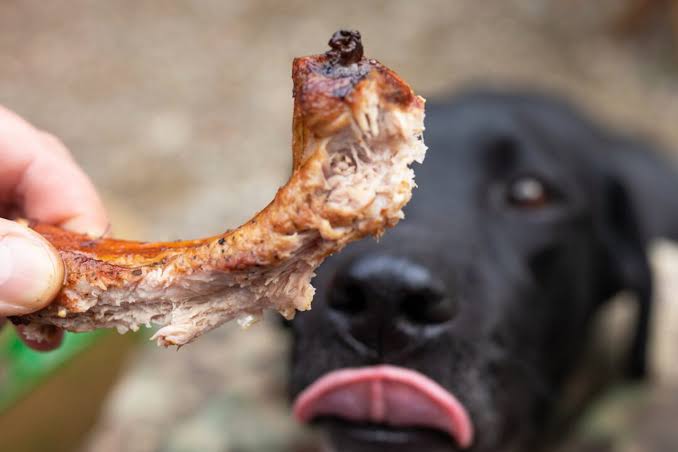
- Cook your dog’s piece separately. A small plain piece of beef, fully cooked, gives them a treat of their own.
- Wrap and bin the bones. Put bones in a sealed bag inside a covered trash can, or take it outside. Dogs will pull them from open bins.
- Keep the carving board out of reach. Leave the roast on the counter’s far side, or move it to the table once it’s carved.
- Tell your guests. Ask them not to feed the dog scraps or drop food from their plates.
- Use “leave it.” Our puppy training guide covers the basics, and it works for adult dogs too.
- Keep drinks out of reach, too. Our eggnog guide explains why alcohol is a risk for dogs. For other dishes on the holiday table, see our green bean casserole guide.
Frequently Asked Questions
Can dogs eat prime rib bones?
No. PetMD says no animal bones are safe for dogs, and cooked bones are even riskier because they splinter. If your dog swallowed one, call your vet or an emergency clinic right away.
Can dogs eat leftover prime rib?
Only if it’s plain, trimmed, and fully cooked. Leftover prime rib usually has a seasoned crust, fat, and juices, so it’s better to cook a separate plain piece. PetMD advises trimming fat and avoiding garlic, onion, salt, butter, and oil.
Can dogs eat prime rib fat?
No. PetMD says fatty beef can cause digestive upset or pancreatitis, and recommends trimming excess fat. Throw the fat cap away where your dog can’t reach it.
Can dogs eat medium-rare prime rib?
It’s best to avoid it. PetMD says not to feed raw steak, and recommends cooking to at least 145°F. Cook a separate piece for your dog.
Can dogs have horseradish sauce with their beef?
No. Hepper says horseradish is technically non-toxic, but it can irritate the mouth, nose, and throat and upset the stomach, so it’s not a food to offer. If your dog ate some, watch for vomiting or diarrhea and call your vet if signs appear.
The Bottom Line
Share a little beef, not the roast. Before the crust and sauce go on, cook a small plain piece for your dog, and bin the bones where they can’t be reached. If your dog got into the roast and you see vomiting, lethargy, or belly pain, call your vet right away. For more holiday food help, read can dogs drink eggnog, and browse the dog food guides on PetsFuzz.