
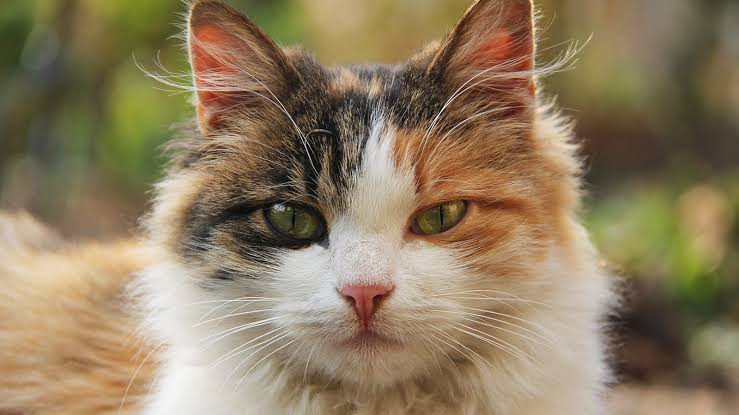

You sit down with dinner, and your cat parks two feet away and stares like you’re about to perform a magic trick. So why does my cat stare at me while I eat? Usually it’s a mix of hope and habit: they’d love a bite, and your mealtime tells them theirs might be next. It’s almost always harmless, though one version of it deserves a vet’s attention.
Why Does My Cat Stare at Me While I Eat? The Short Answer
Cats stare at you while you eat mostly because they’re hoping for a bite, expecting their own meal soon, or looking for your attention. Curiosity about your plate and plain affection play a part too. In rare cases, constant hunger paired with weight loss points to a medical problem, so watch the whole cat, not just the stare.
The six reasons are below, followed by a table that matches your cat’s body language to a cause, the warning signs worth a vet call, and a plan for eating in peace.
What Are the 6 Reasons Cats Stare While You Eat?
1. They’re hoping for a bite
Food is the most common answer. A veterinary behaviorist writing for PetMD lists food among the main reasons cats stare, and notes that some cats watch you eat hoping for a taste of human food. The pattern is easy to spot: the stare, a meow, maybe a rub against your legs, then a glance at your plate.
Cats are creatures of routine, and they learn fast. If staring or meowing ever earned a nibble of chicken, they’ll try again tomorrow. Even a rare “just this once” keeps the habit alive.
2. Your dinner means theirs is next
Your cat may link your mealtime with their own. If you eat at 6:00 and they eat at 6:30, the countdown starts when your fork comes out.
There’s a biological piece too. Cats evolved to eat many small meals through the day, so two big meals can leave them hungry and vocal. A cat who stares hardest right before their usual mealtime is telling you the clock is the problem, not your food.
3. They’re curious about your plate
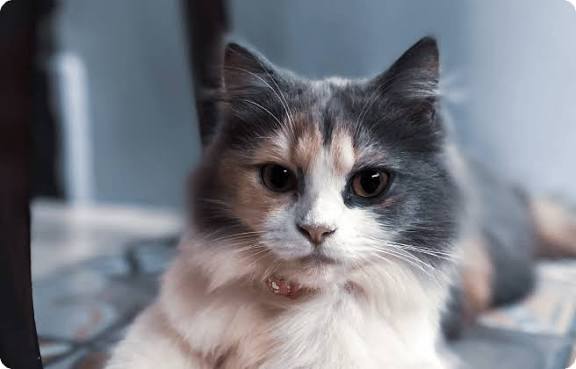
A hot, strong-smelling dinner is more interesting than the same kibble they’ve eaten for months. Curious cats often stare, sniff the air, lean in, and sometimes stretch a paw toward the plate. Curiosity tends to fade fast. They check it out, decide it isn’t for them, and wander off.
4. They want your attention
PetMD notes that attention-seeking stares often come with a slow blink, a meow, or rubbing against nearby objects. Dinner is one of the few times in the day when you sit still, and for a social cat, a person sitting still is an invitation.
If it’s attention they’re after, a few minutes of play before you eat works better than a bite of your food.
5. They’re showing affection
Sometimes the stare is just love. According to PetMD, steady eye contact with a soft blink signals that a cat feels safe with you. Slow-blink back and see what happens. Our guide to signs your cat loves you covers the other ways cats say it.
6. Something medical is driving their hunger
This is the one to rule out. Veterinarian Rhiannon Koehler, writing for PetMD, calls increased appetite with weight loss a “classic sign” of hyperthyroidism. Diabetes can raise appetite while the cat loses weight, usually with more thirst and more trips to the litter box. Intestinal parasites and some cancers can also make cats eat more.
A cat who suddenly turned into a food obsessive, especially a thinning one, needs a vet visit, not a stricter feeding schedule.
Which Reason Fits Your Cat?
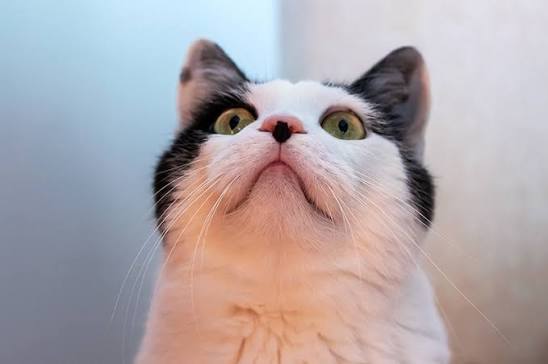
The stare looks similar across causes. The body around it gives the clue.
| What you see | Likely reason | What to do |
| Stare, meow, rubbing your legs, glances at your plate | Hoping for a bite | Ignore it calmly and don’t feed from your plate |
| Stares around their usual mealtime, then heads for the bowl | Mealtime routine | Adjust meal times or add a small meal |
| Sniffing, leaning in, wanders off after a minute | Curiosity | Nothing needed |
| Slow blinks, soft eyes, head bumps | Affection or attention | Slow-blink back and pet them after you eat |
| Crouched, dilated pupils, swishing tail, then a pounce at your foot | Play | Run a wand-toy session before dinner |
| Always hungry, losing weight, drinking more | Possible medical issue | Call your vet |
One more type of stare has nothing to do with dinner. A hard, unblinking look with a stiff body, ears pulled back, or raised fur is fear or a warning, according to PetMD. Look away, stay still, and give your cat room.
Is It Normal for a Cat to Stare While You Eat?
Yes. It’s one of the most common cat habits, and the stare on its own isn’t a health sign. What matters is the cat behind it.
See your vet if your cat stays unusually hungry even with plenty of play and enrichment, or if you notice weight loss or more urination. Go to an emergency vet if a hungry cat suddenly stops eating, vomits, or has trouble urinating. Our guide on a cat that stops eating explains what to watch for.
Should You Share Your Food With Your Cat?
Our take: no. Even a small habit of sharing teaches your cat that staring pays, and overfeeding can lead to obesity, diabetes, joint problems, and heart disease. If you want to treat your cat, use cat treats and count them as part of their daily food.
There’s a safety reason too. The ASPCA warns against several common people foods, and cats are especially vulnerable to some:
- Onions, garlic, and chives. Cats are more susceptible than other pets, and these can damage red blood cells and cause anemia.
- Chocolate and caffeine. They can cause vomiting, diarrhea, tremors, seizures, and abnormal heart rhythm.
- Alcohol. It’s absorbed quickly and can be life-threatening.
- Xylitol. This sweetener can cause low blood sugar and possibly liver damage.
- Raw dough. Rising yeast can cause painful bloating and also produces alcohol.
- Raw meat, eggs, and bones. They can carry Salmonella and E. coli, and bones can injure or block the digestive tract.
- Milk and dairy. Many cats lack the enzyme to digest it, so it often causes diarrhea.
If your cat grabs something from your plate, call your vet or the ASPCA Animal Poison Control Center.
How Do You Get Your Cat to Stop Begging at the Table?
Rule out a medical cause first. Then work through these steps. Consistency is what makes them work.
- Set fixed meal times and measure portions. Predictable meals cut down on begging in between. Use a measuring cup or scale instead of eyeballing it.
- Split meals if you can. Three or four smaller meals a day suit how cats naturally eat. An automatic cat feeder can handle the extra meals when you’re out.
- Feed your cat just before you sit down. This is our own tip, not a rule: a full bowl and a dinner of their own can make yours less interesting.
- Use puzzle feeders. Making your cat work for food keeps them busy and slows down eating, which can leave them feeling fuller.
- Play before dinner. Ten minutes with a wand toy burns off the energy and attention-seeking that fuel the stare.
- Ignore the stare every time. No eye contact, no talking, no food. It works, but it takes time, and one lapse can undo a week of progress.
- Reward calm behavior. Give praise or a small treat when your cat waits on a perch or in another room, not while they’re begging.
- Skip the punishment. Squirt bottles and other scare tactics don’t fix the cause and can damage your cat’s trust in you.
Frequently Asked Questions
Why does my cat stare at me while I eat and meow?
The stare and the meow together usually mean “feed me” or “notice me.” If it’s new, constant, or paired with weight loss, extra thirst, or more urination, ask your vet to check for a medical cause.
Why does my cat stare at me while I eat even after being fed?
Habit and instinct, most often. Cats evolved to eat many small meals, so a cat who just ate may still be interested in your food. It could also be learned: if staring ever got a bite, it’s worth trying again. If your cat seems truly starving after meals, see your vet.
Should I ignore my cat when she stares at me while I eat?
Check her body language first. If she’s relaxed or begging, calmly ignoring it is the best approach. If she looks tense, with dilated pupils, flattened ears, or raised fur, give her space instead.
Does my cat staring at me mean she loves me?
It can. A soft stare with slow blinks is a sign of trust, and you can slow-blink back. If the stare is hard, unblinking, and stiff, that’s a different message, so read the whole body.
Can I give my cat a bite of my food?
It’s better not to. It reinforces begging, and some common foods, like onions, garlic, chocolate, and xylitol, are harmful. If you do want to treat your cat, use cat treats and ask your vet how many are safe.
The Bottom Line
Tonight, feed your cat 15 minutes before you sit down and see what changes. If the stare softens, it was mostly mealtime and habit. If your cat is always hungry and losing weight, book a vet visit. For more help reading your cat, browse the cat behavior guides on PetsFuzz.



Pingback: Can Cats Eat Stuffing? Why Most Recipes Are Risky - PetsFuzz